
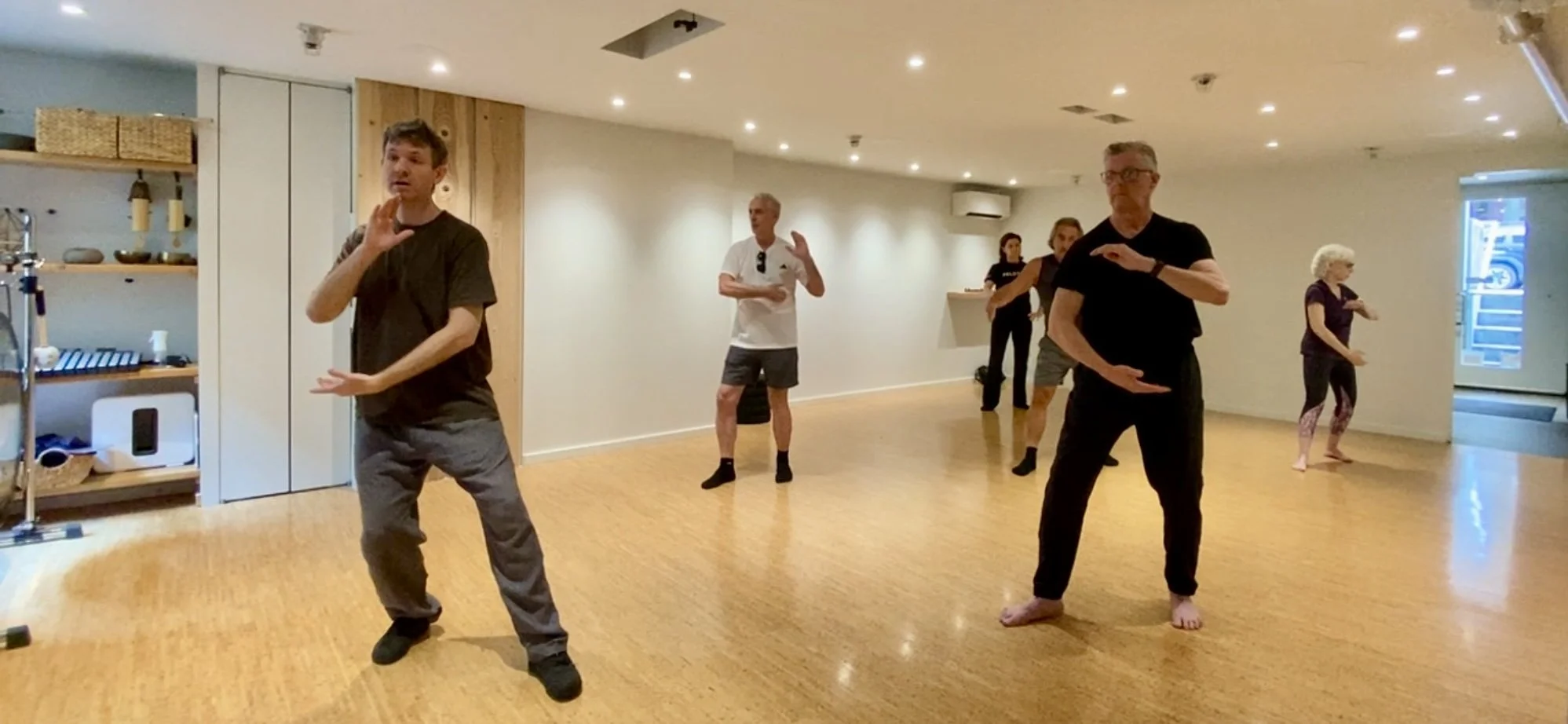
1,744 Clinical Trials Later, Science Finally Has an Answer About Tai Chi
This is pretty cool, and I think it's worth talking about in detail.
A study was just published in the British Journal of Sports Medicine and it's the largest review of its kind ever conducted on traditional Chinese exercises. Here's what it actually looked like - 92 meta-analyses, data from 1,744 randomized controlled clinical trials, 547 unique outcome measurements across 10 categories of musculoskeletal conditions.
Researchers called it an "umbrella review," which is the highest level of evidence synthesis that exists in research. You're not looking at one study, you're looking at a study of studies, of studies.
It's about as thorough as it gets!
Their conclusion was that traditional Chinese exercises like Tai Chi, Qigong, Baduanjin, Yijinjing, and Wuqinxi, produce what researchers call "high-certainty evidence" of real benefit.
That's the top rating in the GRADE framework, the gold standard for evaluating medical evidence.
High certainty means the evidence is strong enough that further research is very unlikely to change the conclusion.
So what did that high-certainty evidence actually show?
Tai Chi significantly reduced pain across multiple musculoskeletal conditions.
It improved physical function in people with knee osteoarthritis, measured on two of the main clinical tools used in orthopedic medicine, the WOMAC scale and the SF-36.
It improved mental health in people with knee osteoarthritis and neck pain.
It improved sleep quality in people with fibromyalgia.
And it increased bone mineral density at multiple weight-bearing sites in people with osteopenia and osteoporosis.
Overall, 72% of the 547 associations studied showed statistically significant benefit. More than half of those were significant at the highest statistical threshold.
That's not a trend, that's a pattern!
The researchers also found some things that I think are really worth noting.
Tai Chi outperformed aerobic exercise for fibromyalgia.
It offered quicker pain relief and better patient adherence than education-based approaches for knee osteoarthritis.
And the mechanisms they identified for why this works are interesting: the slow, controlled movements build lower-limb strength, balance, and proprioception through neuromuscular adaptation, while the breathing and meditative components actually reduce inflammatory markers, specifically TNF-α and IL-6, and modulate the stress response.
The body and mind aren't being trained separately. They're being trained together, which is why the effects show up across physical, psychological, and sleep-related outcomes at the same time.
Now here's the thing about dosage, because this is where people often fall short…
Maximum benefits came from practicing at least 3 times a week, 150 or more minutes per week, for 6 months or longer. But the subgroup analyses also showed that even short-term, lower-frequency practice produced real, clinically meaningful results. Even 1 to 2 sessions per week showed significant improvements for knee osteoarthritis.
So there's essentially no excuse not to start. The practice compounds and starting matters more than starting perfectly.
The paper concluded that these exercises represent "a safe, accessible and cost-effective strategy" that should be formally integrated into clinical guidelines and rehabilitation programs worldwide.
The truth is, studies like this, although maybe not at this scale, have been showing the efficacy of these practices for decades. This one just happens to be the most comprehensive synthesis ever done, and it lands at a moment when 1.69 billion people worldwide are living with musculoskeletal conditions.
Low back pain alone is the leading cause of disability in 160 countries. These aren't fringe problems, they're the most common chronic conditions on planet earth.
And for most people dealing with them, the options they've been given are medications, procedures, and physical therapy focused on isolated mechanical fixes.
What this research confirms is that a practice rooted in whole-body integration, breath, and movement produces real, measurable clinical outcomes across a remarkable range of conditions.
I came to these practices through wrist pain that nothing else could touch. Two surgeries, years of treatment. What finally changed things for me wasn't another procedure, tt was learning to move in a way that made sense to the whole system. That understanding came from these arts, from the Chinese medicine principles that underlie everything we do at Root of Movement.
This is what we do. Not just as a supplement to real healthcare, as a real, evidence-based healthcare strategy.
If you want to explore what that looks like in practice, in your body, for your specific situation, that's what we're here for.
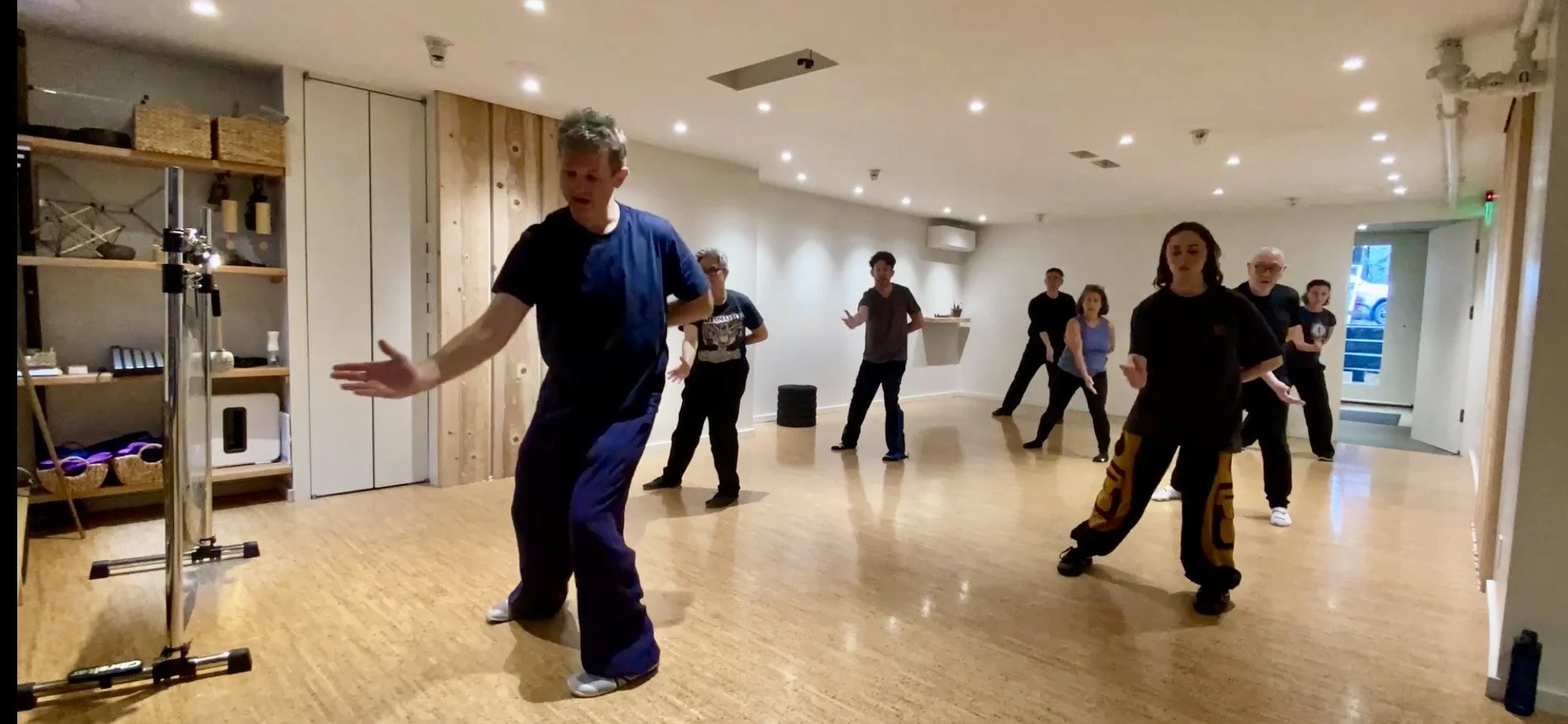
The Intelligence You've Been Trained to Ignore (And How to Get It Back)
We spend years in school learning to think, analyze, reason, and problem-solve, and those are clearly useful skills. But there's another kind of intelligence that never made it onto the curriculum, and most of us have spent our entire lives quietly overriding it.
Your body is constantly reading the world around you and sending you information..
Subtle signals, clear sensations, even warnings that arrive well before the analytical mind catches up. I know you've felt it before, even if you didn't have a name for it. Knowing something was wrong before you could explain why. Sensing that a situation was off before any visible evidence confirmed it. That quiet pull toward or away from something that you talked yourself out of because you couldn't justify it logically.
That's not imagination. That's a real, sophisticated sensing system doing exactly what it was built to do.
The problem isn't that the body stopped communicating. The problem is that we stopped, or, more accurately, were never formally taught how, to listen.
What the Body Is Actually Doing
Modern research on the fascial network has made something very clear that ancient practitioners mapped out centuries ago. In my teachers program, Tian Gan Nei Gong by, Tom Bisio, he talks about the foundational research on fascia and internal martial arts, explains it this way - fascia is largely innervated by proprioceptive nerves. That means proprioception, our ability to sense the position of the body in space and to feel what's happening internally, is primarily a fascial function, not a muscular one.
In other words, your body has a built-in sensing system that is woven into every layer of tissue, every organ, every movement pattern. It is constantly gathering information and sending it upward. The question isn't whether the signal is there. The question is whether anyone is on the receiving end.
Practices like Ba Gua Zhang, Tai Chi, Qi Gong and Nei Gong work directly with this system.
The Qi Gong principle of "The Mind in Motion," as described in Qi Gong: A Functional Path to Health and Longevity, is about using relaxed concentration to re-pattern the nervous system and the musculoskeletal link, and the skills developed in practice carry into daily life.
That's not a side effect. That's the whole point!
What the Tradition Has Always Known
In my teachers other book, A Tooth from the Tiger's Mouth, there's a passage that puts the whole thing in simple terms. Tom writes that we all know how to eat properly, but we've forgotten how to trust our own instincts. We've become separated from our common sense.
He was writing specifically about nutrition, but that observation reaches a lot further than the dinner table. We've outsourced our inner knowing to external validators like experts, metrics, second opinions, and endless research, and in the process, we've let the quieter intelligence go largely unheard. It's not that the instinct disappeared. It's that we stopped giving it any airtime.
What Ba Gua Zhang, Tai Chi, Qi Gong and Nei Gong work on, in a very real and practical way, is the reconnection to what the internal arts calls the Original Mind… the inner knowing that lives outside of analytical thinking.
These practices don't pile more information on top of what you already have. They remove interference so you can hear what was always there.
In the Tian Gan Nei Gong program from Tom, he says the practice asks you to "cultivate an attitude of gently suggesting to yourself where the sensing and observing take place, and then relax the Mind-Intention and let it observe, listen and sense." Not force it. Not manufacture it. Not analyze what comes up. Just allow. That runs completely opposite to how most of us were trained to function, and it is precisely why it works.
The way of the tao is to allow. Not try!
Why This Matters More Now Than Ever
The constant onslaught of information, messaging, noise, and opinion that we all navigate every single day has made this harder than it's ever been. We’re flooded with signals from outside while the signals from inside get buried further and further down.
This is one of the reasons I feel like what we practice is genuinely needed right now, not as a wellness trend or a stress management technique, but as a real skill - the ability to turn attention inward and actually hear something useful.
What This Looks Like in Practice
In class, the reconnection shows up in concrete and sometimes surprising ways. People start noticing things they'd been walking right past. Things like tension that had become so familiar it felt like their natural resting state, breath patterns that were quietly winding them up, signals the body had been sending for years without anyone on the receiving end.
It’s not relegated to just practice, either. Over time, decisions get cleaner, the constant second-guessing starts to soften and people stop overriding what they already sense and start trusting it instead.
That intelligence was never gone, it just needed someone to get quiet enough to hear it.
How to Begin
You don't have to overhaul your life to start reconnecting. A few things that help immediately..
Move with attention, not ambition. Even a short daily Qi Gong practice done with genuine internal focus is worth more than a high-intensity workout where the mind is somewhere else entirely.
Stop asking what it's supposed to feel like. In class, I'll sometimes pause and ask someone, "How does that feel?" and they'll look around for the right answer. There is no right answer. Start with what's actually happening, not what you think should be happening.
Pause before you analyze. The next time you're making a decision, check in with your body first. What's the physical sensation? Contraction or expansion? Ease or resistance? You don't have to act on it blindly, but at least let it speak.
These practices have been cultivating this kind of intelligence in people for generations of people. The body isn't just a vehicle for the mind. It's a sophisticated sensing system in its own right, and most of us have just stopped listening.
If you're ready to start working with it, class is a good place to begin. We meet weekly in New York City. Private 1-on-1 sessions are also available for more personalized attention in person or online.
Come check it out and see for yourself.
Why Ba Gua Zhang, Qi Gong, and Nei Gong Have No Ceiling
Ba Gua Zhang, Qi Gong, Tai Chi and Nei Gong don't plateau like other activities. Discover why internal arts keep growing with you for a lifetime. Classes in NYC.
Last month I had a realization about a movement I've done thousands of times. Something I technically "learned" in my very first year of practice.
Except I didn't really learn it then. I just scratched the surface of it. And last month, after all these years, I finally caught a glimpse of what's underneath that surface. And there's more underneath that. And more underneath that.
I've been practicing internal arts for almost 20 years. My teacher has practiced for over 40. His teacher longer than that. None of them ever arrived at a point where they said, "Okay, I've got this. Time to move on." Because that moment doesn't come. Not because you're not progressing, but because the practice doesn't have a ceiling.
The Cycle Most People Are Stuck In
Most hobbies and activities have a ceiling. You get good at them, you plateau, you've learned what there is to learn, and then you're either maintaining or getting bored. So you quit, or you go looking for something new to chase. There's nothing wrong with that, but it does mean most people are always starting over.
I've watched this happen with students who come to class from other backgrounds. They're used to that cycle of learning something, getting decent at it, hitting the wall, moving on. So when they start Ba Gua Zhang or Qi Gong, they keep waiting for the moment when they've "got it." When they can check the box and feel like they've arrived somewhere.
The truth is that box never gets checked. And once you understand why, it changes everything.
What the Tradition Actually Teaches
This isn't a limitation of the practice, it's a feature, and the tradition has been pointing at it for centuries.
In Ba Gua Zhang, the foundational practice of circle walking is described as continuously tapping an inexhaustible potential for transformation and change, with cyclical revolutions that have no beginning or end. Each circle builds on the last. The basic skills of stepping and turning are said to create "1,000 changes and 10,000 transformations." That's not poetry. That's practitioners across generations documenting what actually happens when you commit to going deep into something rather than wide.
In the Tian Gan Nei Gong manual writen by my teacher, Tom Bisio, is equally direct about this. It instructs students to view their practice as an evolutionary process, where your understanding on any given day might be completely different than your understanding a week, a month, or a year later. Even the masters kept changing. Chinese teachers would make subtle adjustments to the same exercises over 15 to 20 years, not because they'd been doing it wrong, but because their internal perception of the exercises kept deepening and evolving. They encouraged students to evolve right along with them.
There is no external standard of perfect performance you're measuring yourself against. The practice lives inside you and it keeps growing with you.
The Russian Nesting Doll Problem
Think of it like those Russian nesting dolls. You open one, there's another inside. Open that one, another inside. Except in these practices, you never get to the last one and find it empty. There's always something more.
This is exactly what happened to me last month with that movement. What I thought I understood about it in year one was real, but it was the outermost layer. What I understand now is real too, but it's just the next (or several) layers in. And I can already sense that there's more beyond where I currently am.
That's not frustrating. It's genuinely one of the most exciting things about this work. The depth is inexhaustible.
Depth Over Width
Most of us have been conditioned to accumulate. More skills, more knowledge, more certifications, more things. Always going wider, and there's a place for that. But there's another way of growing that our culture almost never talks about, and that's going deeper into the same thing.
Qi Gong, Ba Gua Zhang, Nei Gong, and Tai Chi are all built on this principle. These aren't practices you master and move past. They're practices that keep meeting you where you are, at every stage of life, and keep revealing more the longer and more sincerely you practice.
The tradition says this kind of practice method may seem slow, but in reality it is fast.
Natural development, like a plant growing, happens in small steps at the right time. You can't pull on the rice shoots to make them grow faster. You just show up, practice sincerely, and let the thing develop the way it's meant to.
Why This Makes It Sustainable for a Lifetime
This is also what makes internal arts different from almost anything else out there when it comes to longevity. You're not constantly chasing new things or burning energy starting over. You're going deeper into the same thing, and the deeper you go, the more you realize how much is actually there.
Once you stop expecting the ceiling you can start appreciating the depth. Because you realize you've found something that doesn't expire, something that will keep challenging you, keep rewarding your attention, and keep giving back as long as you keep showing up.
Most people spend their lives going wider, this is an invitation to go the other direction.
Come check out a class or start training with me privately. You're not looking for something to master - you're looking for something that grows with you.
Talk soon,
Jonathan
Root of Movement Internal Arts
Root of Movement Internal Arts offers weekly classes in New York City and private 1-on-1 sessions in person and online. Jonathan teaches Ba Gua Zhang, Qi Gong, Nei Gong, Tai Chi and Internal Martial Arts, making ancient Daoist longevity practices accessible to everyday people.
How Posture, Movement, and Breath Affect Your Body, a Beginner's Guide to Qi Gong & Nei Gong
I want to talk about something that I think gets overlooked way too often. How you carry yourself through this world is pretty much the foundation of everything. How you feel day to day, how your body functions, and honestly what you're even capable of doing.
If you've ever wondered whether practices like Qi Gong or Nei Gong could actually help you feel better in your body, this is for you.
And you don't need any experience to start!
You're Not Broken, You Might Just Be Disconnected
Here's the thing that took me a long time to really understand…
Posture and movement and breath aren't things you practice for thirty minutes and then stop and go on with your day.
They're things you're already doing all day long whether you're thinking about them or not.
You're standing, you're moving, you're breathing, every single moment, so the question I like to ask is this.
What if instead of treating your body like it's broken and needs to be fixed in some appointment once a week, you started to see that you're not broken at all.
You're likely just a little disconnected, and the good news is that connection can be relearned.
What Makes These Practices Different
What I teach comes from Traditional Chinese Martial Arts and Chinese Medicine.
One of the things that drew me to these practices in the first place is that they're principle based.
Meaning you're not just memorizing a bunch of exercises and movements that you'll forget the second you walk out the door.
You're actually learning how your body wants to move.
How to find your center(s) and move from it/them.
How to feel more balanced and more mobile and more at home in yourself.
And once you understand the principles you can apply them to everything you already do.
A Quick Look at Qi Gong, Nei Gong, Tai Chi, and Ba Gua Zhang
If you're new to all of this the names can feel a little intimidating, so let me break them down simply.
Qi Gong is a gentle practice of coordinated movement and breath that helps you build energy and calm the body.
Nei Gong goes a little deeper into the internal work, training the connections inside the body that most of us never learned to feel.
Tai Chi is the slow flowing practice a lot of people have seen in the park, and it teaches balance, relaxation, and moving from your center.
And Ba Gua Zhang is a profound internal martial art that builds mobility, coordination, and an intrinsic, grounded kind of strength.
They all live under the same umbrella of internal arts, and they all come back to the same foundation, how you stand, move, and breathe.
Who This Is For
I think that's the part that gets me excited. Because whether you're somebody who's dealing with pain right now and looking to heal, or somebody who feels good but wants to stay that way and prevent injury down the road, or somebody who just wants to keep cultivating strength and vitality for the long haul so you can keep doing the things you love for as long as you choose, it all comes back to the same place. Your center, and how you stand and move and breathe.
Come Practice With Us in NYC
If any of this resonates with you I'd love for you to come check out the schedule and find a class that feels right. We teach Qi Gong, Nei Gong, Tai Chi, and Ba Gua Zhang right here in New York City and online. There's a few different options and they all live under the same umbrella. You don't need any experience and you don't need to know anything about these arts going in. You just need to show up and be willing to listen to your body a little more closely than you're used to.
Come stand tall, move freely, and breathe deep with us.