
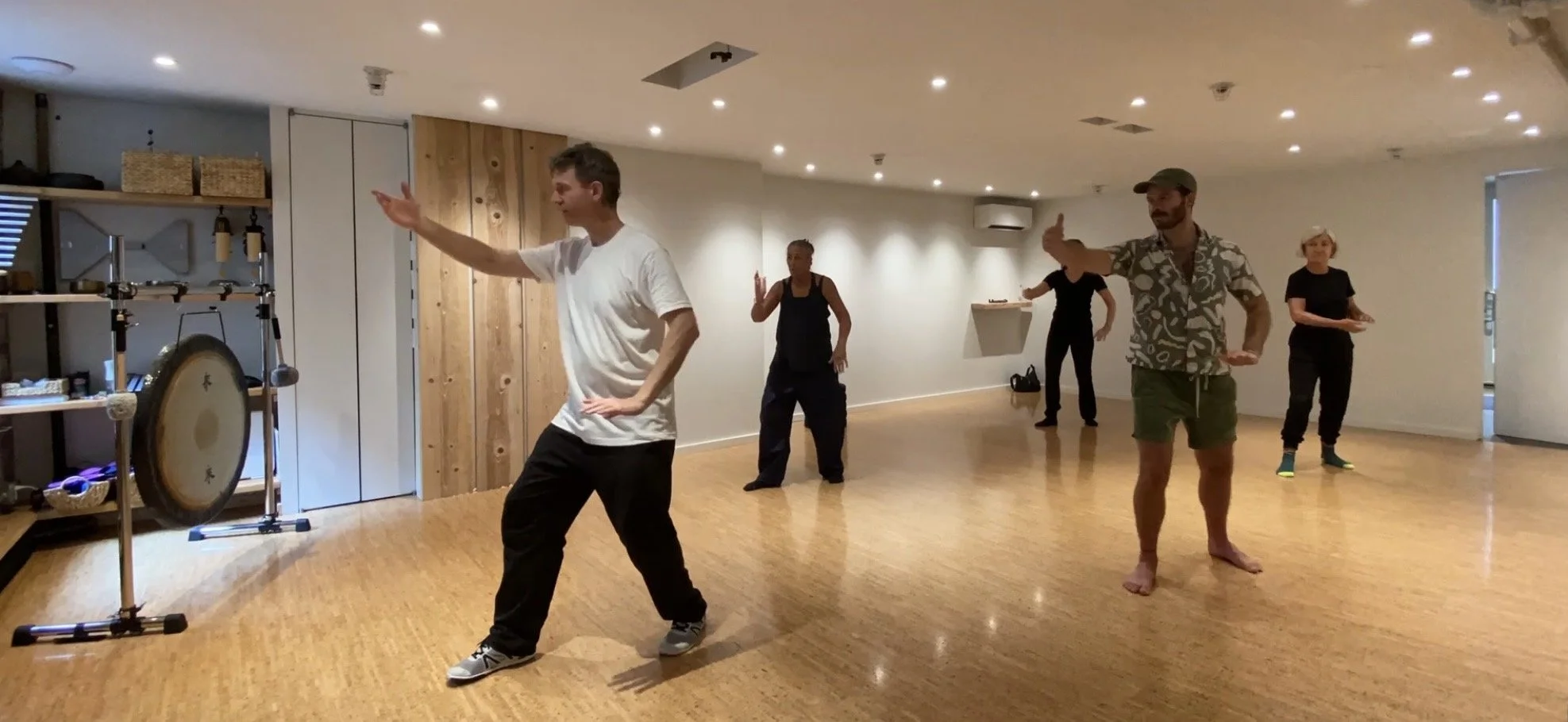
Function Over Form: What Your Walk Reveals About Your Health
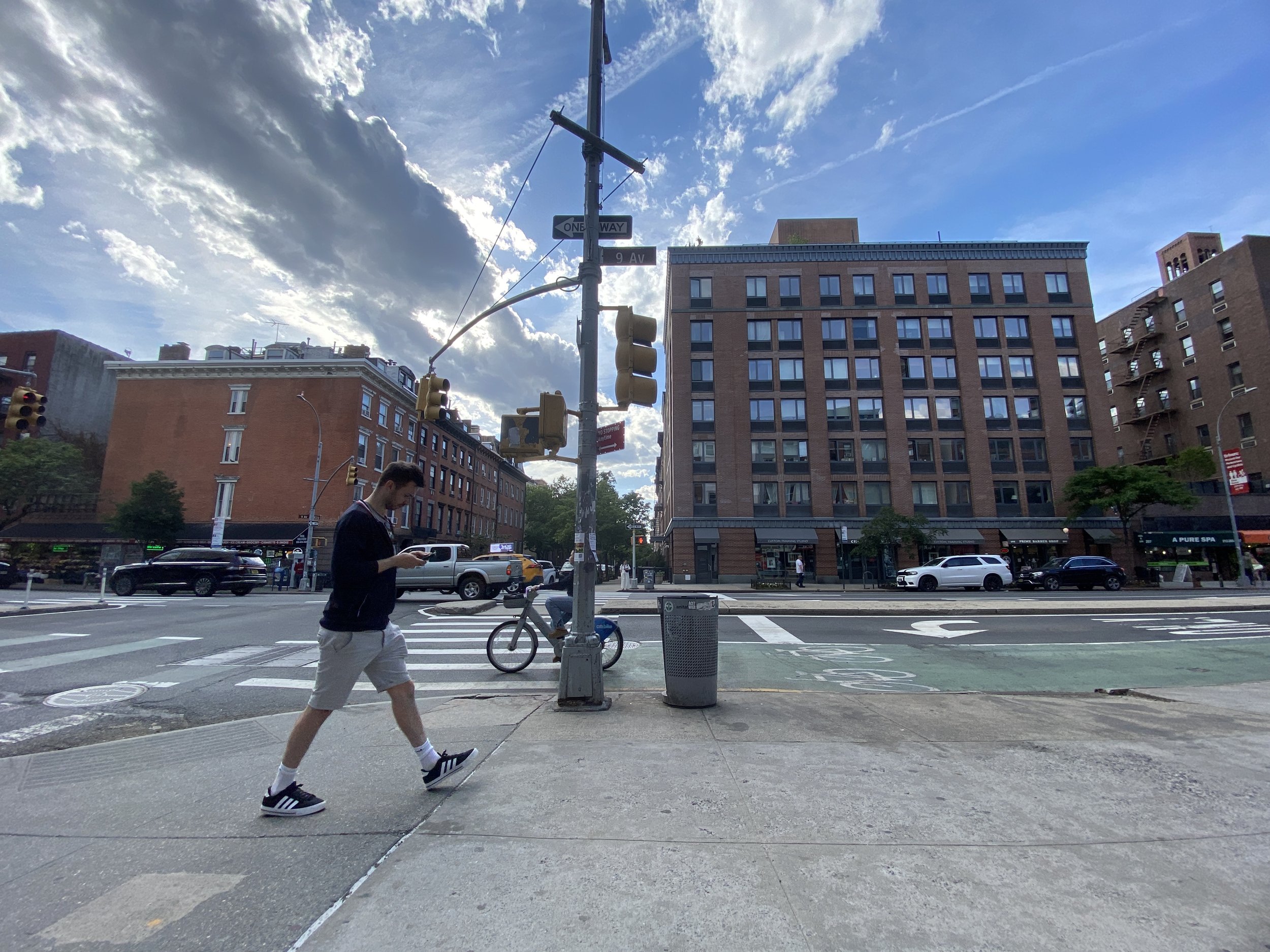
There's something you can learn about a person just by watching them cross the street.
Not their posture or whether their spine looks perfectly stacked or their shoulders are squared.
What you're actually watching for is whether the whole thing moves together, whether there's a quiet rhythm to it, a coordination that happens without them thinking about it.
Some people have it, even if their structure looks far from perfect on paper. And some people don't, even though they look completely fine standing still.
That gap, between how the body looks and how the body actually works, is at the heart of what these ancient Chinese practices like Qi Gong, Ba Gua and Tai Chi are designed to address.
The Insight That Changes Everything
I've been spending time recently assisting at an acupuncture clinic upstate, working alongside a colleague who has been in clinical practice for close to two decades. We're treating patients back to back with acupuncture, Tui Na, Qi Gong, herbs, and qi gong exercises sent home with people as their physical therapy homework. It's a busy, thriving practice, and watching him work is amazing.
At one point during a session, he said something to a patient that stopped me mid-thought.
Function over form.
Three words. And they cut through about ninety percent of the confusion people carry about their bodies, about pain, about why certain things have stopped working the way they used to.
We've been conditioned, by fitness culture, by medicine, even by the way we talk about the body, to measure health by how things look. If a spine looks straight, it must be healthy. If posture looks good, the body must be working well. If an injury looks healed on an MRI, the problem must be gone.
But the body doesn't actually work that way, and these practices have always known it.
What My Teacher Tom Bisio Teaches About Integration
Tom Bisio, whose work sits at the foundation of everything I teach, addresses this directly in A Tooth from the Tiger's Mouth.
When he talks about recovering from injury, the goal isn't simply getting a body part to look right again, it's getting it to function in harmony with the rest of the body.
He makes the observation that injuries often create a break in the connection between the injured area and the whole. An injured knee becomes "my bad knee," something separate, something other. And that separation, even after the tissue heals, is where dysfunction lives.
Real recovery, real rehabilitation, stops that separation and it restores integration.
That's a fundamentally different way of thinking about the body than most people are used to. It's not about fixing a part- It's about restoring the whole.
This’s exactly why Qi Gong, Nei Gong, Tai Chi and Ba Gua Zhang take the approach they do.
Instead of simply targeting individual muscles or correcting isolated structural problems, these arts work to restore the inner coordination that should be running quietly in the background every time you move.
In one of Toms programs, Tian Gan Nei Gong he teaches that physical therapy and massage can relieve pain and restore movement potential, but they often don't restore the neuro-muscular wiring that generates proper internal movement. Without that restoration, some of the dysfunction remains.
This can go on for a lifetime, and often does.
Your Gait Is a Window Into Everything
Of all the ways to observe whether that integration is actually happening, gait, the simple act of walking, is one of the clearest.
Think about what a single step is supposed to involve. When the body is working correctly, a step isn't just a foot touching the ground. The whole spine rotates gently with each stride. The tissues breathe, blood and fluids move through areas that would otherwise stagnate, circulation reaches into the corners of the body that sitting all day has cut off.
There is, when everything is communicating, a symphony of movement that unfolds with every step, and you don't have to think about it at all.
But when that integration breaks down, whether from old injury, chronic tension, years of compensatory patterns, or simply from the disconnected way most of us have learned to live in our bodies, the step becomes mechanical. Parts move, but the whole doesn't.
You can see it, and more importantly, you can feel it.
What Ba Gua Zhang Research Actually Shows
In The Art of Ba Gua Zhang, Tom cites research comparing longtime Ba Gua practitioners to healthy non-practitioners doing the same exercise. Twelve minutes of quick walking.
The results were impressive. The Ba Gua group walked faster, with lower heart rates and lower blood pressure. Not because they were more fit in the conventional sense, but because decades of practice had cultivated a different quality of movement at the deepest level.
The research also found that Ba Gua circle walking burns significantly more calories than normal walking, because the rotational, spiral nature of the movement engages the entire body in a way that ordinary linear walking just doesn't.
Tom also describes how the slow, deliberate Mud Walking Step of Ba Gua (similar to Tai Chi walking) practice fully engages the body in controlling weight shifts from foot to foot, aligning the joints of the lower leg, and forging a connection all the way up through the body's energy centers in the Dantian and Mingmen (the lower basin of the torso.)
The body isn't just moving, it's communicating with itself.
That's function from the inside out.
Why Form So Often Follows Function (Not the Other Way Around)
Here's the thing that surprises people when they first start working with these practices..
You don't need your body to already look a certain way to benefit. You don't need perfect posture going in. You don't need a structurally ideal body, or a clean bill of health, or anything resembling what "correct" is supposed to look like.
What the internal arts work on is the restoration of coordination, of inner communication, of the self-organizing intelligence the body has always had access to.
Through self-observation, through breath, through the kind of relaxed, focused attention that Qi Gong and Nei Gong cultivate, the body begins finding its way back. Not because you forced it into the right shape, but because you gave it the conditions to remember how to work.
As an example, the Tian Gan Nei Gong system works specifically with the natural spiral movement patterns that run throughout the body. Injury and aging can reduce or even eliminate these spirals, leading to dysfunctional movement that both creates and maintains patterns of pain, reduced flexibility, and reduced range of motion. Tian Gan exercises restore those patterns, not by overriding the body, but by teaching it to move correctly again, from the inside.
And when function returns, form often follows on its own.
Posture improves because the body is actually integrated, not because someone told it to stand up straight. The gait becomes fluid because the whole system is communicating, not because any single part was corrected. The symphony returns.
This Is Original Functional Medicine
There's a lot of talk today about "functional medicine," and most of it is fine. But the principles these Chinese arts operate on are the original version, refined over centuries of clinical observation and practice. The idea that the body is an organic whole, that no part can truly be treated in isolation from the rest, that restoring function is both the goal and the measure of health, none of that is new. It's just that we drifted away from it.
Watching patients move through that upstate clinic and the people I work with in my classes and teaching one on one, watching them arrive guarded and leave lighter, watching the body respond to intelligent, integrated care, it's a reminder of what these practices have always been about. Not perfection or performance but function.
If something isn't working the way it should, the question isn't always what does it look like? The better question is, is it connected? Is it communicating? Is the whole thing moving together?
Start Working With This
If any of this is ringing true, the good news is you don't have to wait until something breaks down to start. Qi Gong, Nei Gong, Ba Gua Zhang and Tai Chi are all accessible practices that meet you where you are and build from there.
My classes at in Greenwich Village, New York City are a good place to begin. Private sessions are also available if you want more personalized attention.
Jonathan is the founder of Root of Movement Internal Arts and teaches Ba Gua Zhang, Qi Gong, and Internal Martial Arts at The Qi Center in New York City. He studied under Tom Bisio, whose books A Tooth from the Tiger's Mouth and The Art of Ba Gua Zhang are cited throughout this post.
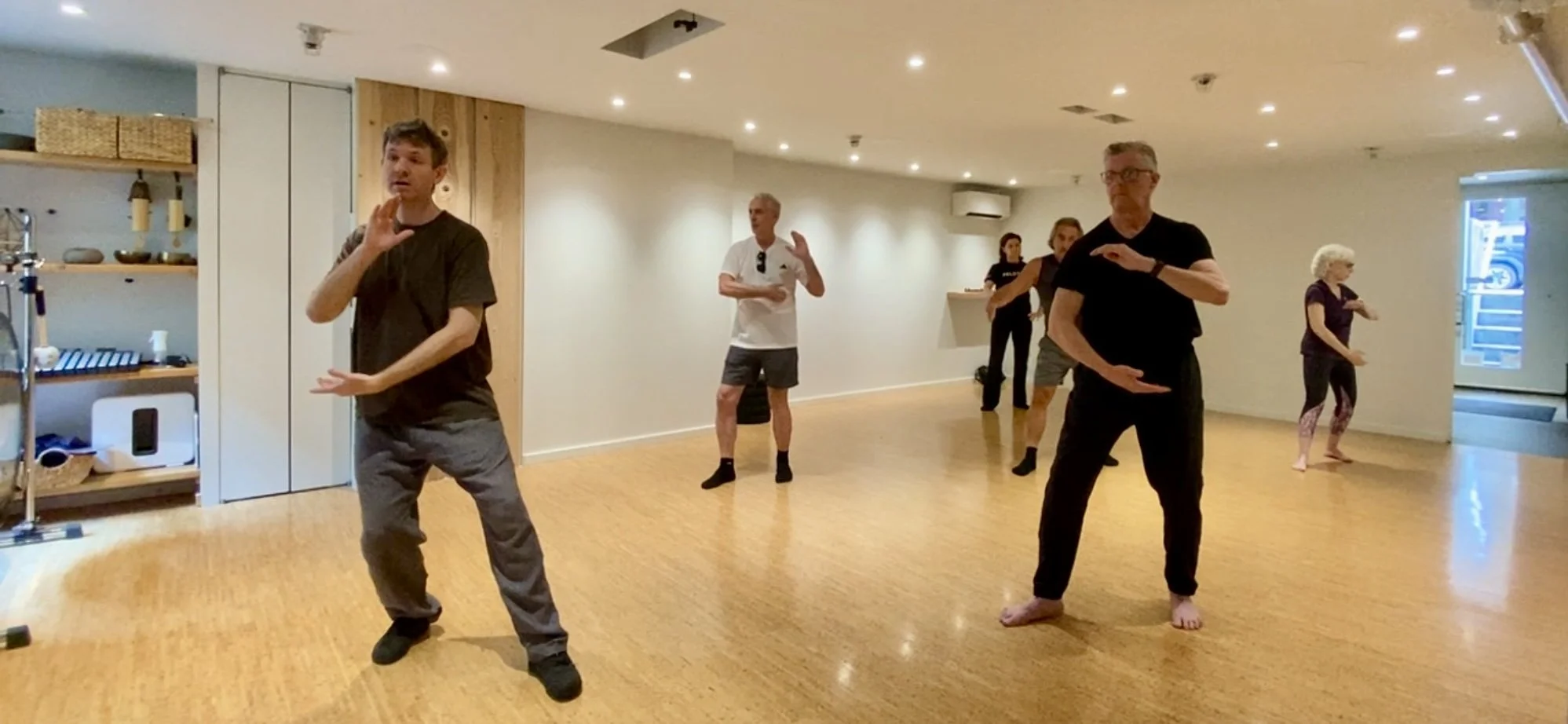
1,744 Clinical Trials Later, Science Finally Has an Answer About Tai Chi
This is pretty cool, and I think it's worth talking about in detail.
A study was just published in the British Journal of Sports Medicine and it's the largest review of its kind ever conducted on traditional Chinese exercises. Here's what it actually looked like - 92 meta-analyses, data from 1,744 randomized controlled clinical trials, 547 unique outcome measurements across 10 categories of musculoskeletal conditions.
Researchers called it an "umbrella review," which is the highest level of evidence synthesis that exists in research. You're not looking at one study, you're looking at a study of studies, of studies.
It's about as thorough as it gets!
Their conclusion was that traditional Chinese exercises like Tai Chi, Qigong, Baduanjin, Yijinjing, and Wuqinxi, produce what researchers call "high-certainty evidence" of real benefit.
That's the top rating in the GRADE framework, the gold standard for evaluating medical evidence.
High certainty means the evidence is strong enough that further research is very unlikely to change the conclusion.
So what did that high-certainty evidence actually show?
Tai Chi significantly reduced pain across multiple musculoskeletal conditions.
It improved physical function in people with knee osteoarthritis, measured on two of the main clinical tools used in orthopedic medicine, the WOMAC scale and the SF-36.
It improved mental health in people with knee osteoarthritis and neck pain.
It improved sleep quality in people with fibromyalgia.
And it increased bone mineral density at multiple weight-bearing sites in people with osteopenia and osteoporosis.
Overall, 72% of the 547 associations studied showed statistically significant benefit. More than half of those were significant at the highest statistical threshold.
That's not a trend, that's a pattern!
The researchers also found some things that I think are really worth noting.
Tai Chi outperformed aerobic exercise for fibromyalgia.
It offered quicker pain relief and better patient adherence than education-based approaches for knee osteoarthritis.
And the mechanisms they identified for why this works are interesting: the slow, controlled movements build lower-limb strength, balance, and proprioception through neuromuscular adaptation, while the breathing and meditative components actually reduce inflammatory markers, specifically TNF-α and IL-6, and modulate the stress response.
The body and mind aren't being trained separately. They're being trained together, which is why the effects show up across physical, psychological, and sleep-related outcomes at the same time.
Now here's the thing about dosage, because this is where people often fall short…
Maximum benefits came from practicing at least 3 times a week, 150 or more minutes per week, for 6 months or longer. But the subgroup analyses also showed that even short-term, lower-frequency practice produced real, clinically meaningful results. Even 1 to 2 sessions per week showed significant improvements for knee osteoarthritis.
So there's essentially no excuse not to start. The practice compounds and starting matters more than starting perfectly.
The paper concluded that these exercises represent "a safe, accessible and cost-effective strategy" that should be formally integrated into clinical guidelines and rehabilitation programs worldwide.
The truth is, studies like this, although maybe not at this scale, have been showing the efficacy of these practices for decades. This one just happens to be the most comprehensive synthesis ever done, and it lands at a moment when 1.69 billion people worldwide are living with musculoskeletal conditions.
Low back pain alone is the leading cause of disability in 160 countries. These aren't fringe problems, they're the most common chronic conditions on planet earth.
And for most people dealing with them, the options they've been given are medications, procedures, and physical therapy focused on isolated mechanical fixes.
What this research confirms is that a practice rooted in whole-body integration, breath, and movement produces real, measurable clinical outcomes across a remarkable range of conditions.
I came to these practices through wrist pain that nothing else could touch. Two surgeries, years of treatment. What finally changed things for me wasn't another procedure, tt was learning to move in a way that made sense to the whole system. That understanding came from these arts, from the Chinese medicine principles that underlie everything we do at Root of Movement.
This is what we do. Not just as a supplement to real healthcare, as a real, evidence-based healthcare strategy.
If you want to explore what that looks like in practice, in your body, for your specific situation, that's what we're here for.
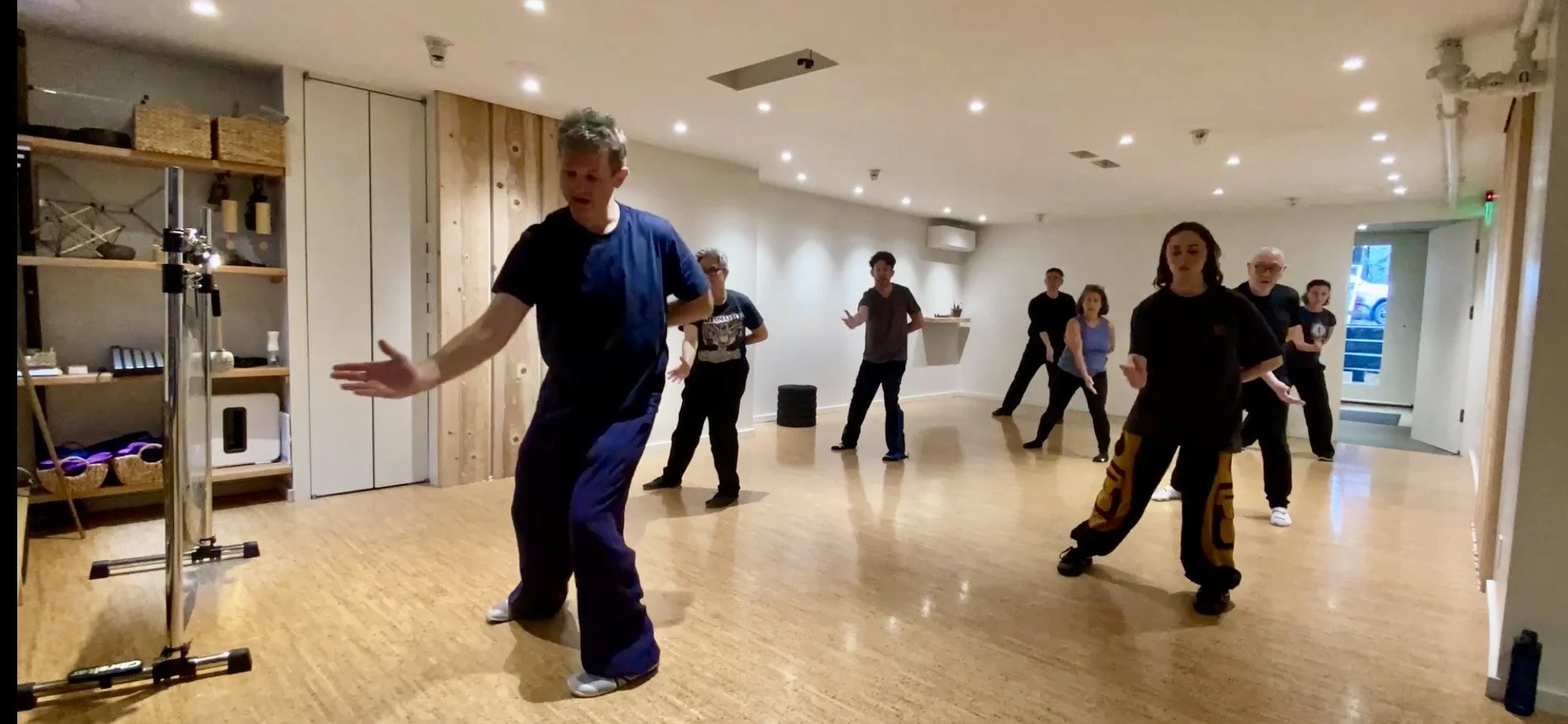
The Intelligence You've Been Trained to Ignore (And How to Get It Back)
We spend years in school learning to think, analyze, reason, and problem-solve, and those are clearly useful skills. But there's another kind of intelligence that never made it onto the curriculum, and most of us have spent our entire lives quietly overriding it.
Your body is constantly reading the world around you and sending you information..
Subtle signals, clear sensations, even warnings that arrive well before the analytical mind catches up. I know you've felt it before, even if you didn't have a name for it. Knowing something was wrong before you could explain why. Sensing that a situation was off before any visible evidence confirmed it. That quiet pull toward or away from something that you talked yourself out of because you couldn't justify it logically.
That's not imagination. That's a real, sophisticated sensing system doing exactly what it was built to do.
The problem isn't that the body stopped communicating. The problem is that we stopped, or, more accurately, were never formally taught how, to listen.
What the Body Is Actually Doing
Modern research on the fascial network has made something very clear that ancient practitioners mapped out centuries ago. In my teachers program, Tian Gan Nei Gong by, Tom Bisio, he talks about the foundational research on fascia and internal martial arts, explains it this way - fascia is largely innervated by proprioceptive nerves. That means proprioception, our ability to sense the position of the body in space and to feel what's happening internally, is primarily a fascial function, not a muscular one.
In other words, your body has a built-in sensing system that is woven into every layer of tissue, every organ, every movement pattern. It is constantly gathering information and sending it upward. The question isn't whether the signal is there. The question is whether anyone is on the receiving end.
Practices like Ba Gua Zhang, Tai Chi, Qi Gong and Nei Gong work directly with this system.
The Qi Gong principle of "The Mind in Motion," as described in Qi Gong: A Functional Path to Health and Longevity, is about using relaxed concentration to re-pattern the nervous system and the musculoskeletal link, and the skills developed in practice carry into daily life.
That's not a side effect. That's the whole point!
What the Tradition Has Always Known
In my teachers other book, A Tooth from the Tiger's Mouth, there's a passage that puts the whole thing in simple terms. Tom writes that we all know how to eat properly, but we've forgotten how to trust our own instincts. We've become separated from our common sense.
He was writing specifically about nutrition, but that observation reaches a lot further than the dinner table. We've outsourced our inner knowing to external validators like experts, metrics, second opinions, and endless research, and in the process, we've let the quieter intelligence go largely unheard. It's not that the instinct disappeared. It's that we stopped giving it any airtime.
What Ba Gua Zhang, Tai Chi, Qi Gong and Nei Gong work on, in a very real and practical way, is the reconnection to what the internal arts calls the Original Mind… the inner knowing that lives outside of analytical thinking.
These practices don't pile more information on top of what you already have. They remove interference so you can hear what was always there.
In the Tian Gan Nei Gong program from Tom, he says the practice asks you to "cultivate an attitude of gently suggesting to yourself where the sensing and observing take place, and then relax the Mind-Intention and let it observe, listen and sense." Not force it. Not manufacture it. Not analyze what comes up. Just allow. That runs completely opposite to how most of us were trained to function, and it is precisely why it works.
The way of the tao is to allow. Not try!
Why This Matters More Now Than Ever
The constant onslaught of information, messaging, noise, and opinion that we all navigate every single day has made this harder than it's ever been. We’re flooded with signals from outside while the signals from inside get buried further and further down.
This is one of the reasons I feel like what we practice is genuinely needed right now, not as a wellness trend or a stress management technique, but as a real skill - the ability to turn attention inward and actually hear something useful.
What This Looks Like in Practice
In class, the reconnection shows up in concrete and sometimes surprising ways. People start noticing things they'd been walking right past. Things like tension that had become so familiar it felt like their natural resting state, breath patterns that were quietly winding them up, signals the body had been sending for years without anyone on the receiving end.
It’s not relegated to just practice, either. Over time, decisions get cleaner, the constant second-guessing starts to soften and people stop overriding what they already sense and start trusting it instead.
That intelligence was never gone, it just needed someone to get quiet enough to hear it.
How to Begin
You don't have to overhaul your life to start reconnecting. A few things that help immediately..
Move with attention, not ambition. Even a short daily Qi Gong practice done with genuine internal focus is worth more than a high-intensity workout where the mind is somewhere else entirely.
Stop asking what it's supposed to feel like. In class, I'll sometimes pause and ask someone, "How does that feel?" and they'll look around for the right answer. There is no right answer. Start with what's actually happening, not what you think should be happening.
Pause before you analyze. The next time you're making a decision, check in with your body first. What's the physical sensation? Contraction or expansion? Ease or resistance? You don't have to act on it blindly, but at least let it speak.
These practices have been cultivating this kind of intelligence in people for generations of people. The body isn't just a vehicle for the mind. It's a sophisticated sensing system in its own right, and most of us have just stopped listening.
If you're ready to start working with it, class is a good place to begin. We meet weekly in New York City. Private 1-on-1 sessions are also available for more personalized attention in person or online.
Come check it out and see for yourself.
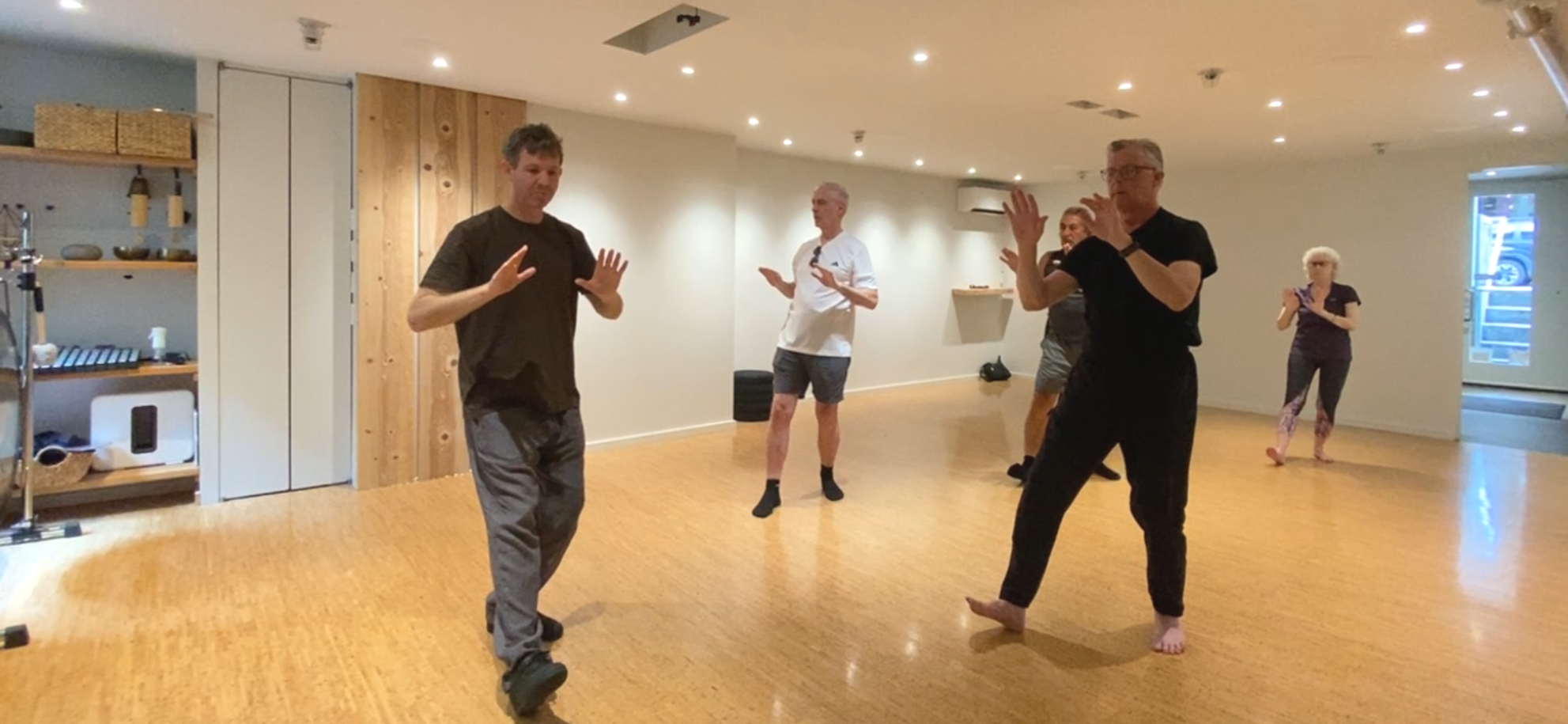
Why Ba Gua Zhang, Qi Gong, and Nei Gong Have No Ceiling
Ba Gua Zhang, Qi Gong, Tai Chi and Nei Gong don't plateau like other activities. Discover why internal arts keep growing with you for a lifetime. Classes in NYC.
Last month I had a realization about a movement I've done thousands of times. Something I technically "learned" in my very first year of practice.
Except I didn't really learn it then. I just scratched the surface of it. And last month, after all these years, I finally caught a glimpse of what's underneath that surface. And there's more underneath that. And more underneath that.
I've been practicing internal arts for almost 20 years. My teacher has practiced for over 40. His teacher longer than that. None of them ever arrived at a point where they said, "Okay, I've got this. Time to move on." Because that moment doesn't come. Not because you're not progressing, but because the practice doesn't have a ceiling.
The Cycle Most People Are Stuck In
Most hobbies and activities have a ceiling. You get good at them, you plateau, you've learned what there is to learn, and then you're either maintaining or getting bored. So you quit, or you go looking for something new to chase. There's nothing wrong with that, but it does mean most people are always starting over.
I've watched this happen with students who come to class from other backgrounds. They're used to that cycle of learning something, getting decent at it, hitting the wall, moving on. So when they start Ba Gua Zhang or Qi Gong, they keep waiting for the moment when they've "got it." When they can check the box and feel like they've arrived somewhere.
The truth is that box never gets checked. And once you understand why, it changes everything.
What the Tradition Actually Teaches
This isn't a limitation of the practice, it's a feature, and the tradition has been pointing at it for centuries.
In Ba Gua Zhang, the foundational practice of circle walking is described as continuously tapping an inexhaustible potential for transformation and change, with cyclical revolutions that have no beginning or end. Each circle builds on the last. The basic skills of stepping and turning are said to create "1,000 changes and 10,000 transformations." That's not poetry. That's practitioners across generations documenting what actually happens when you commit to going deep into something rather than wide.
In the Tian Gan Nei Gong manual writen by my teacher, Tom Bisio, is equally direct about this. It instructs students to view their practice as an evolutionary process, where your understanding on any given day might be completely different than your understanding a week, a month, or a year later. Even the masters kept changing. Chinese teachers would make subtle adjustments to the same exercises over 15 to 20 years, not because they'd been doing it wrong, but because their internal perception of the exercises kept deepening and evolving. They encouraged students to evolve right along with them.
There is no external standard of perfect performance you're measuring yourself against. The practice lives inside you and it keeps growing with you.
The Russian Nesting Doll Problem
Think of it like those Russian nesting dolls. You open one, there's another inside. Open that one, another inside. Except in these practices, you never get to the last one and find it empty. There's always something more.
This is exactly what happened to me last month with that movement. What I thought I understood about it in year one was real, but it was the outermost layer. What I understand now is real too, but it's just the next (or several) layers in. And I can already sense that there's more beyond where I currently am.
That's not frustrating. It's genuinely one of the most exciting things about this work. The depth is inexhaustible.
Depth Over Width
Most of us have been conditioned to accumulate. More skills, more knowledge, more certifications, more things. Always going wider, and there's a place for that. But there's another way of growing that our culture almost never talks about, and that's going deeper into the same thing.
Qi Gong, Ba Gua Zhang, Nei Gong, and Tai Chi are all built on this principle. These aren't practices you master and move past. They're practices that keep meeting you where you are, at every stage of life, and keep revealing more the longer and more sincerely you practice.
The tradition says this kind of practice method may seem slow, but in reality it is fast.
Natural development, like a plant growing, happens in small steps at the right time. You can't pull on the rice shoots to make them grow faster. You just show up, practice sincerely, and let the thing develop the way it's meant to.
Why This Makes It Sustainable for a Lifetime
This is also what makes internal arts different from almost anything else out there when it comes to longevity. You're not constantly chasing new things or burning energy starting over. You're going deeper into the same thing, and the deeper you go, the more you realize how much is actually there.
Once you stop expecting the ceiling you can start appreciating the depth. Because you realize you've found something that doesn't expire, something that will keep challenging you, keep rewarding your attention, and keep giving back as long as you keep showing up.
Most people spend their lives going wider, this is an invitation to go the other direction.
Come check out a class or start training with me privately. You're not looking for something to master - you're looking for something that grows with you.
Talk soon,
Jonathan
Root of Movement Internal Arts
Root of Movement Internal Arts offers weekly classes in New York City and private 1-on-1 sessions in person and online. Jonathan teaches Ba Gua Zhang, Qi Gong, Nei Gong, Tai Chi and Internal Martial Arts, making ancient Daoist longevity practices accessible to everyday people.
How Posture, Movement, and Breath Affect Your Body, a Beginner's Guide to Qi Gong & Nei Gong
I want to talk about something that I think gets overlooked way too often. How you carry yourself through this world is pretty much the foundation of everything. How you feel day to day, how your body functions, and honestly what you're even capable of doing.
If you've ever wondered whether practices like Qi Gong or Nei Gong could actually help you feel better in your body, this is for you.
And you don't need any experience to start!
You're Not Broken, You Might Just Be Disconnected
Here's the thing that took me a long time to really understand…
Posture and movement and breath aren't things you practice for thirty minutes and then stop and go on with your day.
They're things you're already doing all day long whether you're thinking about them or not.
You're standing, you're moving, you're breathing, every single moment, so the question I like to ask is this.
What if instead of treating your body like it's broken and needs to be fixed in some appointment once a week, you started to see that you're not broken at all.
You're likely just a little disconnected, and the good news is that connection can be relearned.
What Makes These Practices Different
What I teach comes from Traditional Chinese Martial Arts and Chinese Medicine.
One of the things that drew me to these practices in the first place is that they're principle based.
Meaning you're not just memorizing a bunch of exercises and movements that you'll forget the second you walk out the door.
You're actually learning how your body wants to move.
How to find your center(s) and move from it/them.
How to feel more balanced and more mobile and more at home in yourself.
And once you understand the principles you can apply them to everything you already do.
A Quick Look at Qi Gong, Nei Gong, Tai Chi, and Ba Gua Zhang
If you're new to all of this the names can feel a little intimidating, so let me break them down simply.
Qi Gong is a gentle practice of coordinated movement and breath that helps you build energy and calm the body.
Nei Gong goes a little deeper into the internal work, training the connections inside the body that most of us never learned to feel.
Tai Chi is the slow flowing practice a lot of people have seen in the park, and it teaches balance, relaxation, and moving from your center.
And Ba Gua Zhang is a profound internal martial art that builds mobility, coordination, and an intrinsic, grounded kind of strength.
They all live under the same umbrella of internal arts, and they all come back to the same foundation, how you stand, move, and breathe.
Who This Is For
I think that's the part that gets me excited. Because whether you're somebody who's dealing with pain right now and looking to heal, or somebody who feels good but wants to stay that way and prevent injury down the road, or somebody who just wants to keep cultivating strength and vitality for the long haul so you can keep doing the things you love for as long as you choose, it all comes back to the same place. Your center, and how you stand and move and breathe.
Come Practice With Us in NYC
If any of this resonates with you I'd love for you to come check out the schedule and find a class that feels right. We teach Qi Gong, Nei Gong, Tai Chi, and Ba Gua Zhang right here in New York City and online. There's a few different options and they all live under the same umbrella. You don't need any experience and you don't need to know anything about these arts going in. You just need to show up and be willing to listen to your body a little more closely than you're used to.
Come stand tall, move freely, and breathe deep with us.
New Research Confirms: Qigong Is the Most Effective Mind-Body Practice for Depression and Sleep Quality
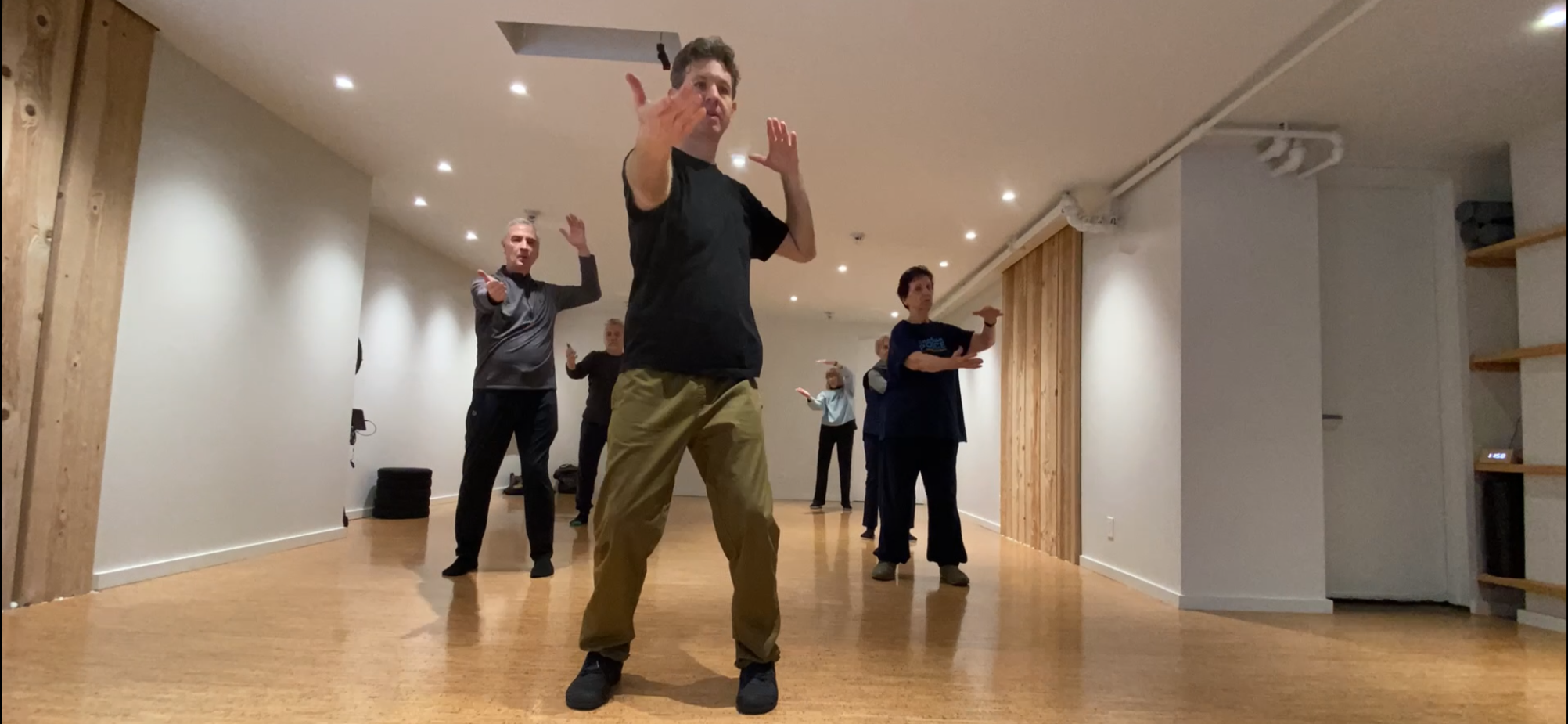
I've been teaching Qi Gong, Tai Chi, and Ba Gua Zhang for over a decade here in New York and online.
And I can't tell you how many times someone has asked me: "Does this actually work? Or is it just... relaxing?"
It’s a fair question.
Especially when you're dealing with real issues like chronic insomnia, anxiety that won't quit, depression that makes getting out of bed feel impossible.
You want evidence, not just anecdotes.
Well, now we have it!
A major study just published in Frontiers in Public Health (March 2026) analyzed 27 randomized controlled trials with nearly 3,000 participants.
The researchers compared five different mind-body therapies - Qigong, Tai Chi, Baduanjin, Yoga, and Yijinjing - to see which ones were most effective for anxiety, depression, and sleep quality.
The results?
Qigong ranked #1 for depression (SUCRA score: 95.0%)
Qigong ranked #1 for sleep quality (SUCRA score: 90.5%)
Yoga ranked #1 for anxiety (SUCRA score: 89.0%)
But here's what really matters:
All of these practices, including Tai Chi and Ba Gua, showed significant benefits across all three outcomes.
And this isn't just about college students (though that's who the study focused on).
Research has consistently shown these benefits extend across age groups, from young adults to people in their 70s and 80s.
And I see it every week in my classes.
What This Study Actually Measured
Let's get specific.
The researchers didn't just ask people "do you feel better?"
They used standardized clinical assessments:
Depression: Self-Rating Depression Scale (SDS), Beck Depression Inventory (BDI), symptom checklists
Anxiety: Self-Rating Anxiety Scale (SRAS), State-Trait Anxiety Inventory (STAI)
Sleep Quality: Pittsburgh Sleep Quality Index (PSQI)
These are the same tools doctors and psychologists use to diagnose and track mental health conditions.
And the results were clear:
For depression, Qigong was significantly more effective than the control group.
It was also significantly better than both Yoga and Baduanjin.
For sleep quality, both Qigong and Baduanjin significantly outperformed the control group.
For anxiety, Yoga led the pack, but Qigong, Tai Chi, and Baduanjin all showed significant improvements.
Why Qigong Works (And What Makes It Different)
Here's what I tell students when they ask what makes Qigong different from other exercise:
Most exercise is about external force, lifting heavier, running faster and pushing harder.
Qi Gong is about integration.
You're not isolating muscle groups or trying to "work hard."
You're learning to move as a connected whole, breath, structure, intention, and movement all synchronized.
The researchers in this study pointed to several mechanisms:
1. Nervous System Regulation
Qi Gong modulates the hypothalamic-pituitary-adrenal (HPA) axis. This is your body's stress response system.
When this system is dysregulated (which happens with chronic stress, anxiety, and depression), your cortisol levels stay elevated, your sleep suffers, and your mood tanks.
Qigong helps reset this system.
2. Neurotransmitter Balance
The slow, controlled movements combined with focused breathing affect monoamine neurotransmitters, serotonin, dopamine and norepinephrine.
These are the same pathways targeted by antidepressant medications, but without the side effects.
3. Brain-Derived Neurotrophic Factor (BDNF)
BDNF is like fertilizer for your brain. It helps neurons grow and form new connections.
Low BDNF is associated with depression. Exercise increases it, but Qigong, with its combination of movement, breath, and focused attention, appears to be particularly effective.
4. Inflammation Reduction
Chronic inflammation is increasingly recognized as a factor in depression.
Mind-body practices like Qi Gong and Tai Chi have been shown to reduce inflammatory markers like TNF-α and IL-1β which are are essentially your body’s fire alarms. Kind of like loud emergency sirens that go off to warn everyone there’s trouble and call in help.
They’re great when there’s a real fire (like an infection), but if they keep ringing too long, they can cause chaos.
Now, here's the important part:
None of the studies in this meta-analysis actually measured these biomarkers.
The researchers are pointing to these mechanisms based on other research, offering a theoretical explanation for why Qigong works so well.
But you don't need to understand the neuroscience to benefit from the practice.
You just need to do it!
What I See in My Classes
The research validates what I see every week.
One student came to me dealing with chronic insomnia and anxiety. Doctors had prescribed sleep medication, but she didn't want to rely on it long-term.
After about a year of daily Qi Gong practice she said.
"I finally understand how to breathe and my breathing is so much deeper. In just a year, so much has changed in my body and my relationship to my holding patterns."
Another student had been dealing with depression for years. Medication helped, but he wanted something more.
"I was in constant pain from an old neck injury. Acupuncture and Western doctors gave me some temporary relief. But now after practicing Qi Gong for the past few months, I rarely think about my neck. Beyond that, it released tension I didn't know was there."
Notice what he said at the end: "released tension I didn't know was there."
That's the thing about these practices.
You don't realize how much you're holding on to physically, mentally, emotionally, until you start to let it go.
Tai Chi and Ba Gua: Different Expressions, Same Principles
The study looked at Qigong, Tai Chi, and Baduanjin as separate practices.
And technically, they are.
But they're all rooted in the same principles:
Whole-body integration
Breath connection
Internal alignment
Mind-intention (where your mind goes, your energy follows)
Tai Chi emphasizes flowing, continuous movement. It's often described as meditation in motion.
The study showed Tai Chi significantly improved all three outcomes, anxiety, depression, and sleep quality compared to control groups.
Ba Gua Zhang (which wasn't included in this particular study, but has been validated in other research) uses circular walking and constant directional changes.
It's particularly effective for people who need something more dynamic, more engaging.
One student described it this way:
"My relationship to my body has changed immensely. I feel stronger, more resilient, and have greater awareness of my body's structural integrity, balance, and my connection to my center of balance."
The practice that works is the one you'll actually do!
Some people resonate more with Tai Chi's flowing forms. Others prefer Ba Gua's circular footwork and constant change. Some need the stillness of standing Qi Gong to start.
But the underlying mechanisms, the nervous system regulation, the breath work, the whole-body integration are the same.
Why This Matters Beyond College Students
The study focused on college students aged 18-29.
But the benefits aren't limited to that age group.
Other research has shown these practices are effective across the lifespan:
A Beijing study found elderly Ba Gua practitioners had better bone density, joint mobility, lung capacity, muscle strength, and balance than healthy retirees who just walked regularly.
Multiple studies have shown Tai Chi reduces fall risk in older adults by improving proprioception (your sense of where you are in space) and leg strength.
Qigong has been shown to improve symptoms in people with chronic fatigue, fibromyalgia, and other conditions that often include depression, anxiety, and sleep disturbances.
I've worked with students from their 20s to their 80s.
And the 70 and 80-year-olds often progress faster than the 30-year-olds.
Why?
Because they're not trying to force anything. They're not in a rush. They understand that this is a practice, not a performance.
What Makes These Practices Different From Other Exercise
Here's what the research makes clear:
Mind-body therapies like Qigong, Tai Chi, and Ba Gua aren't just gentle exercise.
They're fundamentally different from conventional fitness.
Conventional exercise:
Focuses on isolated muscle groups
Emphasizes force and intensity
Often increases cortisol (stress hormone) in the short term
Can be hard on joints and connective tissue
Mind-body practices:
Focus on whole-body integration
Emphasize efficiency and alignment over force
Reduce cortisol and regulate the stress response
Protect and restore joint function
One student who works an extremely demanding job told me:
"I'm constantly busy and my mind is always racing. The way the material is presented allows me to focus on my movements and breath, which carries over to the rest of my day. I highly recommend this to anyone looking to feel better, more focused, and more balanced."
That carryover effect is what makes these practices so valuable from my perspective.
You're not just exercising for 30min and then going back to your stressed-out life.
You're retraining your nervous system, changing your relationship to stress and learning to move and breathe in a way that supports mental and physical health.
The Problem With "Just Try Yoga"
Now, the study did show yoga ranked #1 for anxiety.
And that's great. Yoga is obviously a unbelievably valuable practice.
But here's what I want you to understand:
The study compared these practices in isolation. Yoga vs. Qigong vs. Tai Chi.
In reality, the best approach is often integrative.
I teach Qi Gong, Tai Chi, and Ba Gua because they complement everything else people are already doing.
They build a solid foundation of breath work, internal alignment and energy cultivation.
Students often start with one practice and naturally gravitate toward the others as their practice deepens.
The research shows all of these practices work.
The question isn't ,which one is best for you?
The question is, which one will you actually practice?
What to Expect When You Start
If you're dealing with anxiety, depression, or sleep issues, here's what you can realistically expect:
Week 1-2: You'll probably think "this looks easy" and then be surprised when your legs are shaking after 10 minutes of standing practice.
Week 3-4: You'll start to notice you're breathing differently, deeper and more naturally.
Month 2-3: Sleep starts to improve and you may fall asleep faster and wake up less during the night and feel more rested.
Month 3-6: Anxiety and depression symptoms begin to shift. Not overnight, but consistently you notice you're less reactive and more grounded.
6 months+: The changes become integrated. It's not that you're doing a practice to feel better, but you've changed how you move, breathe, and relate to stress.
The study showed significant effects, but most interventions lasted 8-12 weeks.
In my experience, that's just the beginning.
The real transformation happens when this becomes part of your life.
Why You Need a Teacher (Even Though the Research Used Standardized Protocols)
One limitation of this study: most of the trials used standardized protocols that could theoretically be learned from videos or written instructions.
But here's what I see in practice…
People think they're "sinking their weight" when they're actually leaning forward.
They think they're "breathing deeply" when they're actually holding tension in their chest.
They think they're "relaxed" when their shoulders are up around their ears.
Your proprioception, your sense of where your body is in space, isn't as accurate as you think.
You need feedback.
Someone who can see what you can't feel yet.
That's not a sales pitch, that's just reality.
The research shows these practices work. But they work better when you're doing them correctly.
The Bottom Line
New research confirms what practitioners have known for centuries:
Qigong is the most effective mind-body practice for depression and sleep quality.
Tai Chi, Ba Gua, and other internal arts all show significant benefits across anxiety, depression, and sleep.
These aren't just relaxation techniques.
They're comprehensive practices that address the root causes of mental health issues, nervous system dysregulation, chronic stress, inflammation, and disconnection from your body.
I teach Qi Gong, Tai Chi, and Ba Gua here in New York (in-person and online).
If you're dealing with anxiety, depression, or sleep issues, or you just want to move in a way that actually gets better with age, this might be what you're looking for.
Check my weekly class schedule here.
You'll learn:
The foundational Qi Gong practices that regulate your nervous system
How to connect your breath to your movement (not just "breathe deeply)
Why your sleep improves when you learn to sense inside your body
What whole-body integration actually feels like
No overpromising and no quick fixes.
Just practices that have been validated by both centuries of use and modern research.
See you in class!
Jonathan Breshin
Root of Movement Internal Arts
New York City
P.S. The study analyzed 27 randomized controlled trials. That's not anecdotal evidence, that's rigorous science confirming what my students tell me every week. This works!
Reference: https://pubmed.ncbi.nlm.nih.gov/41938920/
Tai Chi Walking Is Trending. Here's What the Viral Videos Get Wrong (And What They Get Right)
I'm not gonna lie to you.
When I saw those AI-generated muscular grandpas flooding social media with promises of "bulk up in 7 minutes a day" doing Tai Chi walking, I had to laugh.
Not because Tai Chi walking doesn't work.
It does. Big time.
But because what's going viral right now is like watching someone discover fire and then trying to sell you a match as the secret to immortality.
I've been teaching Tai Chi, Ba Gua Zhang, and Nei Gong for over a decade here in New York and online. I've seen what these practices actually do when you approach them correctly.
And I've also seen what happens when people try to shortcut the process.
Here's the truth they’re not telling you...
The Viral Videos Got One Thing Right
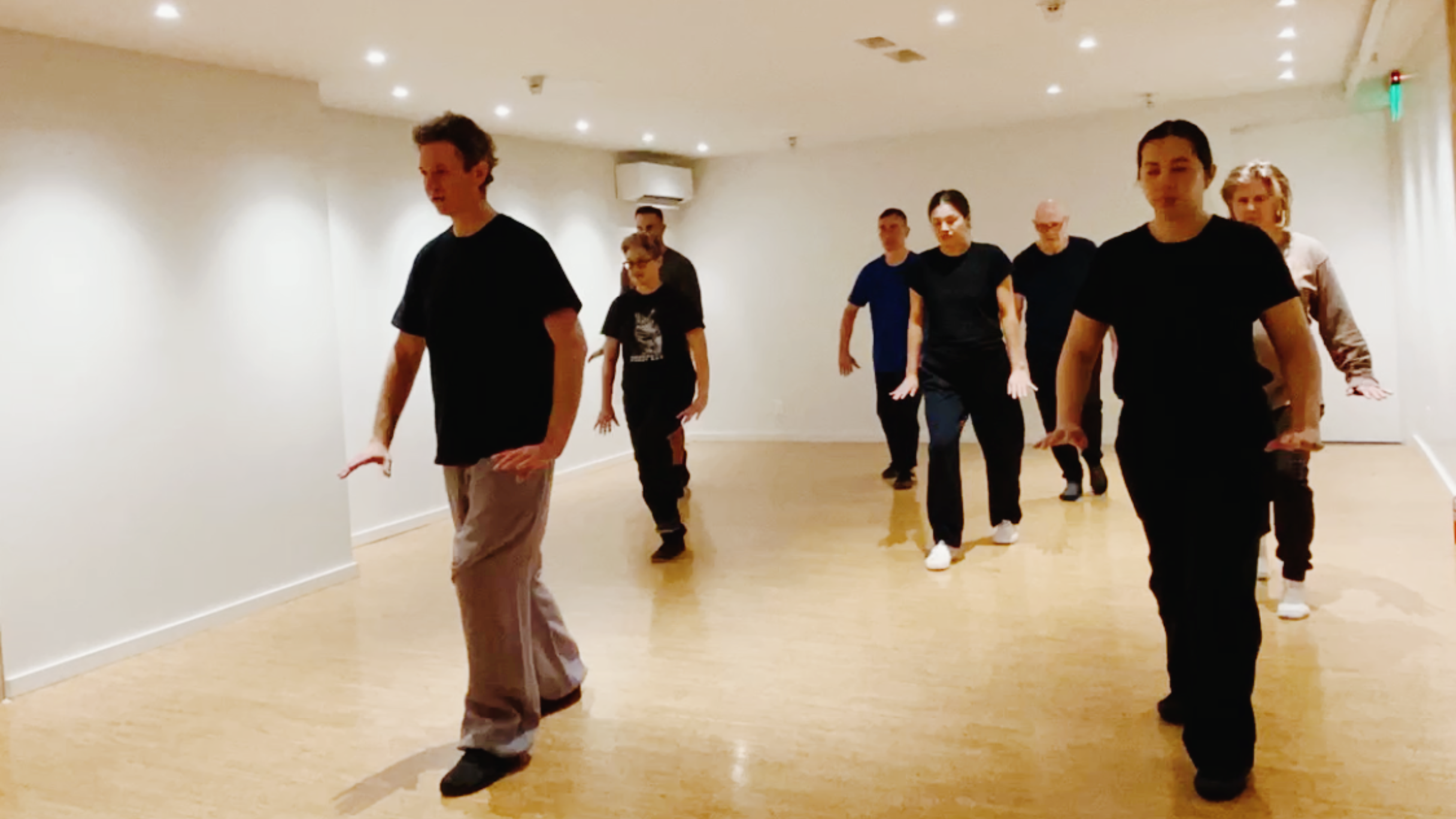
Tai Chi walking – or what practitioners call Tai Chi gait – is legit.
It's the foundational move in Tai Chi practice. One of the first things students learn. And yeah, it delivers real benefits.
Dr. Feng Yang from Georgia State calls it a "catlike walk." You move slowly. Silently. With total control of each step.
Unlike normal walking where you push off and use momentum, Tai Chi walking takes away the pushing. You slow everything down until you have complete control.
And here's where it gets interesting...
Research shows this challenges your balance MORE than regular walking. It forces your body to stabilize itself in ways normal movement doesn't.
Which means:
Better proprioception (your sense of where you are in space)
Stronger legs and core
Reduced fall risk
Improved balance and coordination
For anyone over 50, that last part is huge! Falls are one of the biggest threats to independence as we age.
So the viral videos aren't completely wrong. Tai Chi walking works.
But Here's What They're Missing (And It's Everything)
The problem with these viral videos isn't that they're promoting Tai Chi walking.
It's that they're packaging it like it's some isolated "hack" you can do for 7 minutes while scrolling Tiktok and Instagram.
Like it's separate from everything else.
It's not.
Tai Chi walking isn't a shortcut. It's a foundation.
Think of it like learning to play piano by only practicing scales. Sure, scales are important, but they're not music.
Here's what the viral trend leaves out:
1. The Internal Focus Is What Makes It Work
When I teach people to walk the circle in Ba Gua Zhang (which uses similar principles to Tai Chi walking), the external movement is only half of it.
Maybe less than half.
What's happening inside – the breath work, the internal alignment, the connection between your lower back (Mingmen) and your center of gravity (Dantian) – that's where the real transformation happens.
You're not just moving slowly.
You're learning to sense inside your body and feel the weight shift from one leg to the other. To connect your feet to your core to your breath.
One of my students put it this way:
"My relationship to my body has changed immensely. I feel stronger, more resilient, and have greater awareness of my body's structural integrity, balance, and gravitational dynamics."
That awareness? You don't get it from a 60-second TikTok.
The researchers quoted in the New York Times article are right when they say Tai Chi walking is like meditation. But meditation isn't something you can hack.
"The practice is only as good as the attention you bring to it," as one instructor put it.
And that attention? That's a skill that you develop over time.
2. You Need Feedback on What You're Actually Doing
Here's something I see all the time in my classes:
Someone thinks they're "sinking their weight" or "keeping their body upright" when they're actually doing the opposite.
Your proprioception – your sense of where your body is in space – isn't as accurate as you think it is.
Especially if you've spent years sitting at a desk or compensating for old injuries.
I had a student come in who'd been dealing with chronic ankle pain from an old injury. Acupuncture helped temporarily. Western doctors gave him the same temporary relief.
Six months into practicing Qi Gong and Ba Gua with proper instruction?
"I rarely think about that injury. I'm almost never in pain. Beyond that, the practice released tension I didn't know was there."
The difference wasn't the movements themselves.
It was learning to do them correctly. With feedback and with someone who could see what he couldn't feel yet.
Can you learn the basic mechanics of Tai Chi walking from a video? Sure.
Can you learn to do it correctly without feedback? Probably not.
3. Tai Chi Walking Burns More Calories Than You Think (But Not Because It's "Gentle")
One study found that Ba Gua circle walking – which uses similar stepping patterns to Tai Chi walking – burns 600-1,000 calories per hour.
Normal walking? 300-360.
But here's the thing...
It's not burning those calories because it's "easy" or "gentle."
It's burning them because you're loading your joints differently. You're engaging your whole body. You're creating internal resistance through proper alignment and breath.
When you do it right, it's physically demanding.
Just not in the way most people think of "demanding."
There's no joint stress, or pounding. No huffing and puffing.
But your legs will tell you the next day that you worked.
One student told me:
"Ba Gua was challenging from the beginning, but it quickly revealed a range of motion I wasn't accessing."
That's what proper practice does. It doesn't beat you up, it wakes you up!
4. The Real Benefits Come From Whole-Body Integration
The reason Tai Chi walking helps with balance isn't just because you're practicing standing on one leg.
It's because you're training your body to work as a connected whole.
Your feet connect to your legs. Your legs connect to your hips. Your hips connect to your spine. Your spine connects to your shoulders and arms.
Everything moves together like gears of a watch.
This is what researchers mean when they talk about proprioception. But it's more than just "body awareness."
It's your fascia – the connective tissue that wraps everything – learning to transmit force efficiently through your entire structure.
When that happens, you don't just have better balance.
You have better movement. Period.
I work with a lot of healthcare professionals and bodyworkers. They come in because they're curious. They stay because they realize this is the missing piece in everything they learned in school.
One student, who works an extremely demanding job, said:
"I'm constantly busy and my mind is always racing. The way the material is presented allows me to focus on my movements and breath, which carries over to the rest of my day. I highly recommend this to anyone looking to feel better, more focused, and more balanced."
5. It Gets Better With Age (If You Do It Right)
Here's something the viral videos won't tell you..
This practice actually improves the longer you do it.
I've trained with masters in their 70s and 80s who move better than most 30 and 40-year-olds.
Not despite their age. Because of their practice.
A study in Beijing compared elderly Ba Gua practitioners with healthy retirees who walked regularly.
The Ba Gua group had:
Better bone density
Better joint mobility
Better lung capacity
Better muscle strength
Better balance
Better hearing
They could walk faster with a slower heart rate and lower blood pressure.
Why?
Because they weren't just walking, they were cultivating something.
Another student described it this way:
"After class I feel magical. I finally understand how to breathe and my breathing is so much deeper. In just a year, so much has changed in my body and my relationship to my holding patterns."
That's what happens when you approach this as a practice, not a hack!
So Should You Try Tai Chi Walking?
Absolutely.
But don't treat it like a fitness hack.
Treat it like a practice.
Start with the basics. Learn the mechanics and pay attention to what's happening inside your body, not just what it looks like from the outside.
And if you're serious about it? Find a teacher.
Not because you can't learn anything from videos, you can.
But because the difference between doing the movement and doing it correctly is the difference between maintenance and transformation.
Not to mention one of the things I hear most as a teacher is that people hurt their knees doing Tai Chi.
News flash, it’s NOT Tai Chi.
It’s how it’s being taught and subsequently, performed.
What to Look for in Tai Chi, Qi Gong, or Ba Gua Classes
If you're in New York or can join online, here's what you should expect from quality instruction:
Proper foundational training that teaches you correct body alignment before you start moving
Breath work that connects your movement to your internal energy (not just "breathe deeply")
Feedback and correction so you're not reinforcing bad patterns
A complete system that includes standing meditation, circle walking, and forms – not just isolated movements
A teacher who's trained extensively in the lineage and can explain not just what to do, but why
At Root of Movement Internal Arts, I teach Tai Chi, Ba Gua Zhang, Qi Gong, and Nei Gong every week here in New York City (and online for distance students).
While these are separate practices. Ultimately, they're different expressions of the same principles.
Some people resonate more with Tai Chi's flowing forms. Others prefer Ba Gua's circular footwork and constant change. Some need the stillness of Qi Gong to start.
The practice that works is the one you'll actually do!
Ready to Start?
The viral videos got people interested. That's great.
Now let's do it right.
Check my weekly class schedule here and come experience what Tai Chi walking actually feels like when it's taught correctly.
In your first class, you'll learn:
The basic Tai Chi walking step (done correctly, with feedback)
How to connect your breath to your movement
Why your balance improves when you slow down
What "whole body integration" actually feels like
No AI-generated promises. No 7-minute shortcuts.
Just real practice that gets better the longer you do it.
See you in class.
Jonathan Breshin
New York City

Qigong for Heart Health: What Post-Surgery Patients Are Teaching Us About
Cardiovascular Recovery
For decades, cardiac rehabilitation after heart surgery has followed a predictable protocol: medications, supervised exercise programs, dietary changes, and regular monitoring.
The outcomes? Inconsistent at best.
Despite following medical advice, many patients continue to struggle with chest pain, limited exercise capacity, anxiety, and significantly reduced quality of life. Within the first year after a heart attack, more than half of survivors require hospitalization.
Something is missing from the standard approach.
Now, a comprehensive systematic review published in Medicine is shedding light on an intervention that's producing remarkable results in post-surgical cardiac patients. The practice is called Qigong, and the data is compelling enough that cardiologists and rehabilitation specialists are taking notice.
The Research: 1,384 Patients, Measurable Results
Researchers analyzed 15 studies involving 1,384 patients with coronary heart disease who had undergone cardiac surgery. These weren't minor interventions. The patient population included individuals recovering from coronary artery bypass grafting (CABG) and percutaneous coronary intervention (PCI), two of the most common cardiac procedures performed worldwide.
The intervention group practiced a specific form of Qigong called Baduanjin, which translates to "Eight Section Brocades." This practice consists of eight distinct movements performed in sequence, emphasizing coordinated postures, controlled breathing, and mindful attention.
The control groups received standard care, which varied across studies but generally included conventional rehabilitation therapy, walking exercise, or pharmaceutical management alone.
The Results Were Striking
Quality of Life Improvements
Using the Short Form-36 (SF-36), a validated instrument for measuring health-related quality of life, researchers found that Qigong practitioners showed significant improvements across all eight measured domains:
Physical functioning
Role limitations due to physical health
Bodily pain
General health perception
Vitality
Social functioning
Role limitations due to emotional problems
Mental health
This wasn't selective improvement in one or two areas. Every single category showed statistically significant enhancement.
The Seattle Angina Questionnaire (SAQ), which specifically assesses angina-related quality of life, revealed improvements in physical limitation and angina stability. Patients were able to perform daily activities with less chest pain and experienced more predictable, manageable symptoms.
Cardiac Function Enhancement
Perhaps most importantly, cardiac function itself improved.
Left ventricular ejection fraction (LVEF), the gold standard measurement of how effectively the heart pumps blood, showed significant improvement in the Qigong group compared to standard care alone. LVEF is a critical indicator of heart health and a strong predictor of cardiovascular outcomes.
Dramatic Reduction in Adverse Events
The incidence of major adverse cardiovascular events was 78% lower in patients practicing Qigong compared to control groups.
Major adverse cardiovascular events include:
Nonfatal myocardial infarction (heart attack)
Target vessel revascularization (need for repeat procedures)
Recurrent angina
Congestive heart failure
Severe arrhythmias
This reduction in adverse events is particularly significant because it demonstrates not just symptomatic improvement, but actual protective effects on cardiovascular health.
Understanding Qigong: Beyond the Mysticism
If you're unfamiliar with Qigong, you might picture something mystical or esoteric. Let's clarify what it actually is.
Qigong is a traditional Chinese movement practice that integrates three core elements:
Coordinated postures - Specific body positions and movements
Controlled breathing - Natural, rhythmic breathing patterns
Focused attention - Mindful awareness of movement and breath
Think of it as a sophisticated form of movement therapy that combines elements of physical therapy, breathwork, and mindfulness training. The practice has been refined over thousands of years, but its benefits are grounded in measurable physiological mechanisms.
Unlike high-intensity cardiac rehabilitation exercises such as treadmill walking or stationary cycling, Qigong movements are slow, gentle, and low-intensity. This makes the practice accessible to individuals with limited exercise tolerance, which is common in post-surgical cardiac patients.
The specific form studied in this research, Baduanjin, consists of eight movements performed in sequence. Each movement targets different muscle groups and is believed to influence specific organ systems while emphasizing natural breathing patterns and postural alignment.
Importantly, you don't need to believe in traditional Chinese medicine concepts like "qi" or energy meridians to benefit from the practice. The mechanisms are physiological and measurable.
The Physiological Mechanisms: Why Qigong Works
The researchers identified several key mechanisms that explain Qigong's cardiovascular benefits.
Autonomic Nervous System Regulation
Cardiovascular disease isn't solely about blocked arteries or damaged heart muscle. It's fundamentally about a dysregulated stress response.
Your autonomic nervous system controls heart rate, blood pressure, vascular tone, and numerous other cardiovascular functions. When this system is chronically imbalanced, which commonly occurs after cardiac events and surgery, recovery is impaired.
Qigong practice has been shown to help restore autonomic nervous system balance. The combination of slow, deliberate movement, controlled breathing, and focused attention activates the parasympathetic nervous system (the "rest and digest" mode) while reducing excessive sympathetic activation (the "fight or flight" response).
This shift is critical for cardiovascular recovery and long-term heart health.
Improved Circulation and Microvascular Function
The gentle, flowing movements of Qigong promote blood circulation without placing excessive metabolic demands on a recovering heart.
Research indicates that regular Qigong practice promotes microvascular regeneration. In practical terms, this means your body develops new small blood vessels, improving oxygen and nutrient delivery to tissues throughout the body.
This enhanced microvascular function supports not just cardiac recovery, but overall metabolic health and tissue repair.
Reduced Oxidative Stress
Oxidative stress, caused by an imbalance between free radicals and antioxidants in the body, damages cells and impairs recovery processes.
Studies have demonstrated that Qigong practice increases the activity of antioxidant enzymes and reduces markers of oxidative damage. This is particularly important for cardiovascular health, as oxidative stress is a major driver of continued decline after cardiac events.
Mitochondrial Support
Your mitochondria are the energy-producing structures within your cells. When mitochondrial function declines, so does your capacity for physical activity, mental clarity, and cellular repair.
The metabolic demands of Qigong practice appear to support mitochondrial health without overtaxing an already compromised system. You're essentially giving your cells a manageable workout that promotes adaptation and improved function.
What This Means for Prevention
You might be thinking, "I haven't had heart surgery. Is this relevant to me?"
Absolutely.
If Qigong can improve cardiac function in people recovering from major surgery, consider what it might do for prevention.
Cardiovascular disease doesn't appear suddenly. It develops gradually over years through accumulated stress, chronic inflammation, impaired circulation, and declining mitochondrial function.
The same mechanisms that facilitate recovery in post-surgical patients are the mechanisms that prevent disease progression in the first place:
Autonomic nervous system balance
Enhanced circulation
Reduced oxidative stress
Improved mitochondrial function
Lower systemic inflammation
You don't need to wait for a cardiovascular event to benefit from these adaptations.
Early Warning Signs of Cardiovascular Decline
Declining cardiovascular health doesn't always announce itself with chest pain or obvious symptoms. Often, the signals are more subtle:
Reduced exercise tolerance (you used to walk further without becoming winded)
Poor recovery from physical activity
Feeling simultaneously wired and tired (a sign of autonomic imbalance)
Cold hands and feet (indicating circulation issues)
Brain fog or difficulty concentrating (reduced cerebral blood flow)
Persistent fatigue despite adequate sleep
Elevated resting heart rate
Heightened stress reactivity
If you're experiencing any of these symptoms, your cardiovascular system may be under strain even if standard medical tests show normal results.
Qigong addresses the functional decline that precedes measurable disease, making it a valuable preventive practice.
The Accessibility Advantage
One significant challenge with traditional cardiac rehabilitation programs is poor adherence. Studies show that many patients don't complete recommended programs.
Why? Traditional cardiac rehab is often:
Expensive
Time-consuming
Requires travel to specialized facilities
Depends on equipment and supervision
Inaccessible for people with mobility limitations or those in underserved areas
Qigong eliminates these barriers.
No equipment required. You don't need a gym membership, specialized machines, or any gear beyond comfortable clothing.
No travel necessary. You can practice in your living room, in a park, or anywhere you have a few feet of space.
Highly adaptable. If you can't stand for extended periods, many movements can be performed seated. If you have limited range of motion, the movements can be modified to accommodate your current capacity.
Minimal time commitment. Most Qigong routines can be completed in 20-30 minutes.
This accessibility is why researchers are increasingly interested in Qigong as a scalable public health intervention, particularly for underserved populations.
Practical Considerations
If you're interested in exploring Qigong for cardiovascular health, here are some important considerations:
Qigong is complementary, not alternative. If you have cardiovascular disease or have undergone cardiac surgery, you need appropriate medical care. Qigong should be viewed as a complementary practice that enhances, rather than replaces, medical treatment.
Start gently. Even though Qigong is low-intensity, if you're new to the practice or have significant health concerns, start slowly and pay attention to how your body responds.
Consistency matters more than intensity. The research shows benefits from regular practice over time. A gentle 20-minute daily practice is more beneficial than sporadic intense sessions.
Proper instruction is valuable. While Qigong is accessible, learning proper form and technique from a qualified instructor can enhance your practice and ensure you're performing movements safely and effectively.
The Bottom Line
The research is unambiguous:
Qigong significantly improves quality of life in post-surgical cardiac patients across all measured domains
It enhances cardiac function as measured by left ventricular ejection fraction
It reduces adverse cardiovascular events by 78%
The practice regulates autonomic nervous system balance
It supports mitochondrial function and reduces oxidative stress
It improves circulation and promotes microvascular health
It's safe, accessible, and requires no special equipment
For individuals looking to prevent cardiovascular decline, the same physiological mechanisms apply. You're supporting the systems that maintain heart health before disease develops.
The question isn't whether Qigong works for cardiovascular health. The data clearly demonstrates its efficacy.
The question is whether you're willing to invest 20 minutes a day in a practice that could fundamentally alter your cardiovascular trajectory.
In a healthcare landscape increasingly focused on prevention and patient empowerment, Qigong represents an evidence-based, accessible intervention that puts control back in your hands.
Study Reference: Liu X, Hao X, Zhang W, Zhang F, Liu H. Baduanjin sequential therapy's effects on quality of life and cardiac function in post-cardiac surgery heart disease patients: A systematic review. Medicine . 2026;105:1(e46855). (https://pmc.ncbi.nlm.nih.gov/articles/PMC12778147/)
The Unexpected Cure: How Chinese Martial Arts Healed My Chronic Pain
Ever felt like your body's in a constant state of struggle?
That was me with my chronic wrist and back pain. It felt like a relentless shadow over my shoulders, day after day - for almost a decade.
But then, I stumbled upon an unlikely hero: Chinese martial arts.
Pain, as I learned, is like a beaver dam blocking a creek—Chinese medicine sees it as an obstruction.
Clearing this blockage isn't always straightforward though, especially with chronic conditions. It's not just about removing the obstruction; it's about understanding and addressing the underlying issues.
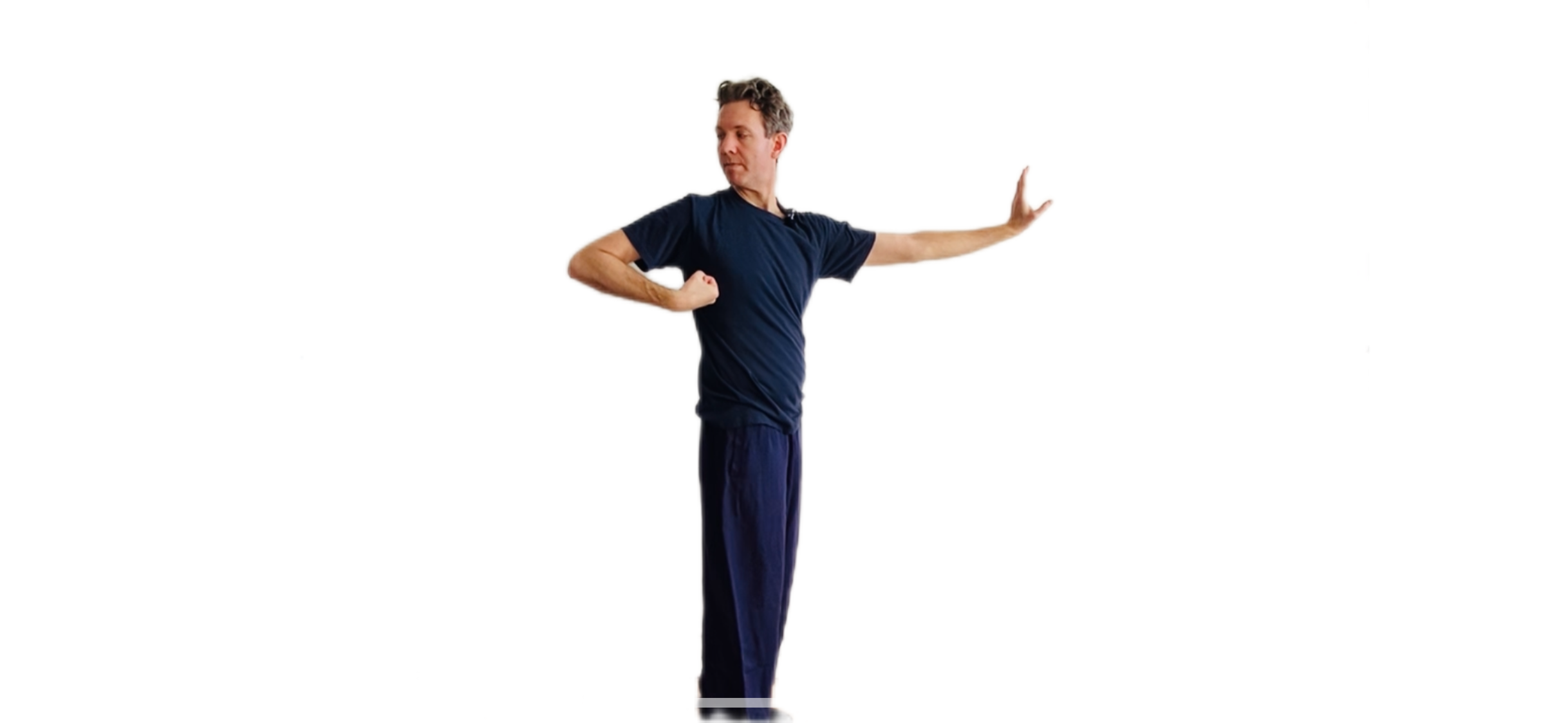
My journey into martial arts wasn't just about learning to punch or kick; it was about mastering the basics: body mechanics, balance, alignment, rotation, and shifting.
These fundamentals brought my imbalances and dysfunctional patterns front and center.
I've been honing these skills for 14 years, starting every session with the same basics. Because without them, my movements lacked power and opened me up to injury and more pain.
Slowing down and focusing on each movement taught me to calm my nervous system on demand, reducing inflammation and promoting healthy blood flow and energy circulation—especially beneficial for my wrist and back.
These practices didn't just support my physical health; they prepared me mentally to stay present and composed during stress.
It was seriously a revelation: movement, balance, alignment, and stress were intertwined, fueling a cycle of pain I couldn't get out from under.
My 2 wrist surgeries failed because they never tackled these root causes.
Martial arts have become my self-applied rehab and therapy, teaching me daily how to realign and rebalance.
I'm still a work in progress, but I'm leagues ahead of where I started, and my wrist and back?
They've never felt better!
This journey has taught me that healing is about more than just treating symptoms.
It's about understanding and adjusting the fundamentals of how we move and live. And for me, Chinese martial arts and Eastern medicine was the key to unlocking that door.

How To Do What You Want For As Long As Your Want
I have friends and colleagues in their 50's and 60's who move and feel better than some of my clients in their 20's and 30's. Here’s what they do different.
In fitness these days most people think exercise means going as hard, fast and intense as possible.
The "No Pain, No Gain!" mentality.
The fixation on burning calories or pushing yourself beyond measure tends to damage and deplete the body and organs in ways that aren’t always so obvious.
And most think that feeling sore, tight and achy is “normal” - it’s what it takes to be “healthy”.
But unless you’re a competitive athlete, it’s a short sighted way of staying fit for most adults.
You really need to ask yourself what’s your end goal?
Is it simply to live in a state of pain and discomfort just to look good, or is it to be able to do what you want, when you want for as long as you want?
The older people I train with who display power, control, balance and agility work out hard sometimes, but mostly they focus on refined strength that’s built over time.
They’re training for today but considering how they’ll feel tomorrow and decades from now.
Refined strength and freedom of movement is something that’s cultivated using focus, patience and consistency.
They’re not just focused on their body and how it looks but how it’s connected to every other aspect of their life experience.
They’re aware that how they move is a reflection of their mental state, and how their mental state also reflects how they move.
They study the relationship and harmony of their body mind & spirit, everyday.
The latest and greatest exercise routines out there are oftentimes not a recipe for longevity and true health and fitness.
Taking some time out to consider what you truly want for your future self is worthwhile investment of your time.
Because having a body mind that functions and performs well, and with more control and freedom into your 60's, 70's, 80's and beyond is done in a nurturing way, not a violent and aggressive way.
Here are a few things to consider as you go into your next workout or activity:
Can you feel your whole body contribute to the movement/exercise you’re performing. (This will require focus and global awareness of your body)
See if you can perform the movement while keeping the breath slow, deep, even and without force.
Look for quality and precision over quantity and intensity.
If you apply these ideas consistently, and observe your results, you’ll find clarity on how to make the movement better, and you’ll experience more longevity and comfort as you continue to move forward in your life!
The path to true health and vitality lies not in pushing our bodies to the limit, but in nurturing them with mindful, balanced practices that serve us today and preserve our well-being for the years to come.

Back to Basics: Breathing Techniques for Spinal Health and Rehabilitation

Throwing out your back can be such an excruciating experience that it literally takes your breath away.
I remember once, about 10 years ago, I walked into a friend's house, and he had thrown his back out earlier in the day. Just the smallest movement caused his whole body to seize up. I could see the pain in his face and I felt horrible.
Later on, I realized that this is a problem so many people struggle with, and for most, it’s a recurring issue.
One thing that was so eye-opening to me was learning that the spine and our breathing are so intricately connected that injuring ourselves can have a huge effect on how we breathe, and in turn, affect all of our neurological and physiological processes in the body.
In contrast, we could develop a poor breathing pattern, that is, breathing at low capacity, i.e., shallow breathing, and this can cause discomfort, pain, and other imbalances and misalignment in the spine. So it can go either way.
The fact that we have soft connective tissues directly connecting to the lumbar spine, low back, and our diaphragm, means that we actually have some control over how we manage our pain.
Breathing is one of those things that our body naturally does without us needing to think about it, but we can also take control through focus and intention.

In Chinese medicine, Qigong, Bagua and Tai Chi, we look at pain and discomfort as a lack of movement, obstruction of the flow of blood, fluids, and energy, Chi, throughout the space that is dealing with pain.
So when we throw out our back and the result is pain and discomfort, tension, the way I look at that is something is not moving.

So we can recreate and reestablish more flow through the area of the spine that is misaligned, which in turn alleviates pain and stress.
Now, the first few breaths are likely going to feel very uncomfortable. The trick is to inhale very slowly and carefully and exhale in the same fashion. What people find is after a few breaths of deep, abdominal breathing, breathing unforced into the lower abdomen and feeling it expand in all directions, can help push blood and fluids and energy through the obstructed area in the back.
The diaphragm, which helps us breathe, also has connections to the rib cage and the sternum. So when we breathe fully into our lungs, and into our lower abdomen, it has an effect across the entire spine, and in turn, relieves pain, calms the nervous system, and promotes circulation.
If this is something that you’ve never tried before, it can change your entire life, and that’s not hyperbole.
Give it a try right now, no matter what you’re doing. You can be sitting, standing, or laying down on your back. The purpose is to engage in what we refer to as observational breathing. What does that mean? It means watching your breath enter and leave your body.

This can take some patience and focus, but it’s well worth the effort. You want to hold your attention in your lower abdomen region, a few inches below the belly button, in front of the low back, and in the perineum area.
We want that space in our lower torso to absorb our awareness, so we can literally have a tangible connection to our breathing. The breath will not fall into that area if the diaphragm does not expand and drop.
This means you’ll likely have to focus on releasing tension from your lower back. Give yourself some time as this may not come easily in the first minute or two. The more you practice this observation of breathing and filling your lower belly with your breath, the faster your body will recover, and the better chance you have at preventing this from happening moving forward.
The beauty of this practice is that you can practice it no matter what time of the day or what you are doing. We’re constantly holding ourselves in alignment and breathing. The goal here is to create more awareness around how you are doing that moment to moment, so we can regulate our breathing and our posture.
Pain relief and stress relief are simply two of the benefits that are had by engaging in observational breathing practices. There are many more benefits that are all byproducts of simply doing what our body was intended to do.

If you’re struggling with any kind of back pain or neck pain, any conditions related to spinal health, and are looking for more support and guidance, schedule a free consultation and let’s see if we can get you back to feeling yourself again.

The Essence of Qi: Demystifying Energy Flow in Our Lives
Throughout my life growing up in the NYC metropolitan area, the word Qi (sounds like chee) was not part of everyday nomenclature.
Have you ever heard of Qi?
From what I’ve seen, most people think it’s hocus pocus, whoo whoo nonsense.
And, I get it. For a lot of people, if they can’t see it - it’s not real.
But to understand energy flow, especially from a Qi Gong, Nei Gong, Ba Gua or Taiji perspective, we need to take a quick look at Qi and its meaning(s).
Historically, Chinese people saw the existence of Qi and believed it to be the basic substance by which all movements and mutations of all phenomena in the universe arise. (1)
In essence, Qi permeates all aspects of life, both visible and invisible.
Now, there’s a lot of literature written on Qi, but the way I like to explain it to new qigong and ba gua practitioners looking for better energy flow throughout their daily lives, is to think of Qi as internal physiological activity inside the body.
This is a simple way to think about it.
In early Chinese texts, Qi is used to refer to various phenomena such as:
Air
Mist and Fog
Moving Clouds
Aromas
Vapors
Smoke
Breathing - Inhalation and Exhalation (2)
In Eastern philosophy and Traditional Chinese medicine, there’s ultimately one qi, but it’s broken down within the body and assigned to different structures, organs, activities, actions and functions.
There’s Liver qi, Lung qi, Upright qi, Orginingal qi, defense qi, warming qi, nutritive qi, etc.
So when you go for acupuncture or herbalist or work privately with a qigong teacher, they generally ask you a bunch of questions about what’s going on.
You may go for neck or back pain relief, but you’ll find them asking about old injuries, digestion, sleep, emotions, energy, etc. ultimately trying to get a sense of what’s going on with the harmonious flow of qi within your body and where it’s being disrupted and imbalanced.
From the eastern perspective, you’re having a blockage of Qi in the area of pain/discomfort, i.e. your neck or back, but the goal is to help you re-balance the Qi within your whole body.
Another way to think about this is, Qi flows through the body kinda like water flows through a hose.
If the hose gets kinked, that’s where we feel pain. But that buildup of water behind the kink can cause other problems, both upstream and downstream, from the obstructed flow.
For example, when I was struggling with chronic wrist pain working as an electrician in NYC in my early 20’s, I had some stagnant qi (energy) in my wrist that was causing me pain.
And 2 surgeries, PT on my wrist, cortisone injections and 8 years of pain didn’t fix the problem.
Why?
It turned out that my upper back, neck, shoulder, lungs, diaphragm and digestive organs all had kinks that were causing a disruption which popped up as wrist pain.
That’s why the wrist surgeries didn’t work.
Movement practices like Qigong and Ba Gua helped me uncover where things were stuck, misaligned and obstructed. It was in places no one else could find. I had to learn how to open them up to get the energy flowing freely again.
And it was done safely and in a way that felt akin to going for massage or chiropractic adjustment.
Once you experience that, you can't unlearn it.
This is incredibly helpful because we’re always getting things kinked up from both physical causes like an injury or bad posture but also from emotional issues and diet as well.
It’s incredibly efficient because It works for all kinds of issues like orthopedic pain, but also headaches, anxiety, general stiffness, digestive disorders, libido issues, and much more.
Your acupuncturist, massage therapist and pt can do a lot in finding some of the obstructions, but when you hit a plateau or things aren't getting better, Qigong and the internal arts help you work from the inside out as they work from outside in.
At the end of the day, there’s a lot going on with Qi! It is energy, but it’s more than that too.
Understanding energy (qi) flow within your own body is your birthright and is essential in functioning well throughout the course of your life.
Pain, tension, stress and disease all point to blockage in energy flow. When you learn how to open up the energetic pathways within your body to restore flow, you feel more relaxed and energized at the same time. Pain fades away, and strength, balance and alignment take it’s place until there’s another kink in the hose that needs to be unkinked.
If you're seeking energy flow practices that have stood the test of time, or if you're grappling with unresolved health issues affecting your daily comfort, I highly recommend exploring qigong, ba gua, or tai chi with an experienced teacher.
References:
(1)The Foundations of Chinese Medicine - Giovanni Maciocia
(2) 21 Things About Chinese Medicine That Every Internal Martial Artist Should Know - Tom Bisio

Listening to the Body: Embracing Modern Approaches in Ancient Arts
Within the world of Tai Chi, Qi Gong, Nei Gong, and Ba Gua Zhang, there are lots of traditional styles and lineages that exist.
And having trained in authentic Qi Gong, Nei Gong, and Ba Gua Zhang since 2010 and taught professionally since 2016, I understand the importance of maintaining the authenticity of your lineage.
It's from this position of understanding and respect for the traditions that I've sometimes found it cringe-worthy to see people on the internet modify or fuse these arts and market them under their traditional names.
When I’d see someone seemingly just swing their arms around and label it Tai Chi, devoid of any authentic connection, it was hard to stomach.
But hearing a personal experience of a new client recently, led me to having a profound epiphany.
This person, plagued by various physical ailments, got tremendous value from a fairly popular online Tai Chi youtube page.
To me, sure, this account seemed to be 'Tai Chi-ish'.
Their method took Tai Chi movements and made them more accessible to the masses, without delving deep into the principles and alignments of the art, which in my understandting is what makes the internal arts unique.
But with these videos, the focus was less on correct form and internal alignments, and more on simplistic follow-along routines.
Now, even though I might have criticized this before, hearing about its value firsthand changed my perspective.
My client, after following along with these videos for the past few months, felt real relief for a few hours after he’d practice. But then, on a friend's recommendation to switch to a more 'authentic' teacher, he began to experience discomfort and lost that sense of relief.
I told him, "Forget what your friend said. Your body is the most honest critic. Listen to it."
My client's main goal wasn’t about attaining mastery as a martial artist, it’s just to live with more comfort and improve his quality of life. So, while the teachings might not be 100% traditional, what truly matters is the persons intentions, goals, and how they resonate with the practice.
I've come to realize that much of the criticism towards more accessible teaching styles might stem from a place of competition.
As skilled practitioners, especially those from renowned lineages like the one I come from, in my humble opinion, we need to rise above such sentiments.
Embracing different methods will not only enrich our understanding but also help us attract students genuinely meant for our teachings.
With all of that benign said and just to be clear, I do not condone people taking a few classes or workshops and then going out and trying to teach the masses. But when a dedicated practitioner chooses to modify what they’ve learned, I’ve come full circle and can see the value.
Does Your Back Hurt Because You’re Getting Old?
I just had a long talk with my barber about how his back has been hurting for the past few years, and he doesn't know why.
He tells me, "Jonathan," (in an Italian accent, he's from Sicily), "I used to play soccer every week, I used to go to the gym, then during COVID, I gained about 15 lbs, and now I'm in my mid-50s, and at the end of the day, my back is in pain."
He says it's not that bad, but it does hurt.
I said, "Anthony, this ain't rocket science. You used to do all those things, and now you don’t, and now your back hurts. Do you think if maybe you got back to being more active and lost a few pounds, things might start to feel differently?"
In my experience, people love to blame age. Maybe because it's convenient. But if age were the reason, then literally everyone would have the same issues as they got older.
And even if it seems like everyone over 40 that you know is struggling with something physically, it's not everyone.
But staying out of pain is not always convenient, although with practices like Qi Gong, Tai Chi, and Ba Gua, it can be.
It takes a committed effort to start something new. And then to keep it going!
The key is to find something that's enjoyable for you, so at least on those days you REALLY don't want to do it, once you get started it's not so bad.
It's also helpful to find something that can check off several boxes at once. It should be efficient and convenient.
That's why I love the internal arts like Qi Gong and Ba Gua.
I think a few of the main reasons why a lot of my clients love it are: you don't need to go anywhere to practice, you don’t need any equipment, you can knock out your daily session in under 20 min if that's all the time you have, it integrates with the rest of your life so normal activities become opportunities for therapy, it feels good and makes you feel more balanced, aligned, and decompressed, it both energizes me and calms you down, it helps improve physical aptitude, increases agility and sharpens your mental focus to name a few.
It's hard to find another physical therapy approach that even comes close to that. And those aren't even all of the benefits.
If you’re thinking you're getting old and that's the reason you're experiencing orthopedic pain, you're mistaken. I mean, age is a factor, but it's literally the only one you can't control.
There are a plethora of other things you CAN control, and I highly recommend getting started on them so the next 10, 20, 30 years plus of your life aren't riddled with more discomfort.
If you want more information on a movement therapy approach like Qi Gong in New York City, Ba Gua in NYC, or Tai Chi in NYC, or if you're interested in online training, schedule a call to speak with us today.

Qi Gong: A Vital Practice for Professionals Who Depend on Their Bodies
As someone who worked in a physically demanding job for years as an electrician, I get it. Over time, your body begins to protest. You wonder - is this just a function of aging?
I thought so too, until my own journey led me to discover a unique practice known as Qi Gong (pronounced 'chee gong').
If aging were the only culprit, everyone growing older would be in constant pain, right? But that's not the case. Not everyone in a physically demanding job lives with pain. A secret to this? Good body mechanics combined with a balanced and aligned skeleton.
A few years ago, I was introduced to Qi Gong, a practice that forever changed my understanding of the body and my approach to physical well-being.
This practice not only gave me a unique perspective on how I was holding and moving myself throughout the day but also helped me suss out the root of my chronic wrist pain.
Qi Gong creates a new level of awareness that helps you identify what's misaligned before it turns into pain.
And if you're already struggling with unresolved pain - be it back pain, neck pain, shoulder pain, or wrist pain like me - it can be a game-changer.
Most people living with chronic pain don't get the lasting relief they hope for from conventional therapies like physical therapy, cortisone injections, chiropractic adjustments or even surgery. It's because these modalities don't always educate the person about the origin of the issue.
Building strength and creating space are essential, sure, but without understanding why things have become weak or imbalanced in the first place, it's a band-aid solution.
This is where Qi Gong shines.
It's not just a practice; it's a daily ritual for self-calibration and rebalancing. A timeless technique that's been evolving for thousands of years, Qi Gong brings your body back to a state that feels familiar, one you might have lost due to years of injury, bad habits, and lack of awareness.
Qi Gong shows you how to move in accordance with your body's natural design.
Most tension and pain result from muscles not firing sequentially in the right order. Qi Gong helps you reconnect with the different areas of your body and understand how they should connect.
It's as simple as it sounds and feels like a massage from the inside out. It doesn't need to take long. I noticed significant improvements in a few weeks, and you could too.
If you're like me, having tried everything but still not where you want to be, Qi Gong could be your missing link.
As a professional instructor and coach now, my greatest joy is empowering others to take control of their physical well-being, just like Qi Gong did for me.

New York City Qi Gong - The Practice You Need to Survive NYC
Clearly, NYC isn’t your average city. Living here is like nothing else, anywhere else.
We're basically piled on top of each other, living in a shared bubble of personal space.
The city noises - streets, subways, shops, neighbors - they sneak into your world whether you're on the clock or just kickin' back at home.
As you know, the smells, they're something else. Some will stop you dead in your tracks (not always in a good way) and they come from everywhere - weed, restaurants, bakeries, trash, you name it.
The streets? A circus of phone-gawkers, cyclists, grumpy walkers, loonies, and clipboard-wielding folks trying to sell you something.
This is where Qi Gong steps in. If you translate it (very) roughly, it means 'energy work.' It's like a daily reset button for the stress of city living, and it helps you become teflon to the everyday grind.
The crazy thing is, when you're swimming in all this chaos day in, day out, you start to tune it out. Your mind and body cover it up so well, you might not even realize the impact it's having.
You know when you finally escape the city for a vacation? It can take days to fully shake off the city's imprint.
I remember one night, my cousin had just moved back to NYC from LA. This guy bleeds NYC pride, he loves this city like a second skin. But, as we walked to the subway after dinner, he winced at a passing ambulance siren. His brother and I just shrugged; we hadn't even registered it.
We'd become city zombies, immune to the chaos. Not exactly the recipe for long-term wellness.
That's where a NYC Qi Gong practice can help. It’s like an ongoing tune-up for your senses so you don't get bogged down by the unnoticed craziness.
Qi Gong is like giving yourself a daily massage. It feels awesome, it’s super relaxing and yet reviving. It brings you back to the 'now,' centering your mind while you focus on your body alignment, movement, and breathing. It’s a full body tune-up promoting harmonious blood and energy flow.
It’s something you can squeeze into as little as 10 minutes per day. The more you practice, the more potent the benefits. It's infinite and intended to be a lifelong journey. That’s why it's seen as a longevity practice.
Plus, it's a powerful method of physical therapy and injury prevention.
So, whether you're a bustling professional, an ex-athlete, performer, or a new parent living in NYC, Qi Gong is the self-care ritual you didn’t even know you needed.
Dive in today and trust me, you won't want to look back!

Give Your Physical Career a New Lease on Life with Qi Gong: A Comprehensive Guide

Are you feeling the aches and strains that come with a physically demanding job? Have you tried everything from physical therapy to chiropractic, with little to show for it?
Before you consider drastic measures like surgery or medication, let's talk about Qi Gong (sounds like Chi Gong). It's an ancient practice that might just give you the tools you need to feel stronger, more balanced & aligned and keep doing what you love for longer.
Intrigued? Let's talk about it..
So, What's Qi Gong?
Imagine a practice that combines gentle exercise, deep breathing, and a zen-like focus – that's essentially Qi Gong for you.
It's an age-old part of traditional Chinese medicine and martial arts, used to cultivate and balance your body, mind and 'life energy' or 'qi'. Sounds mystical? Maybe. But stick with me, it's actually very practical and likely familiar to you already..
Talk Neuromuscular to me..
Now, you've probably done your rounds with physical therapy, right? Here's where Qi Gong shakes things up. Instead of focusing only on injured areas, Qi Gong gets down to the real nitty-gritty. It helps reprogram your body, changing how your muscles interact and fire. This new alignment and balance can help you move more naturally, which is a big deal if you're doing the same physical tasks over and over.
It’s a lot like a self massage, chiropractic or acupuncture treatment that you can do wherever, when ever.
Dealing with an old orthopedic Injury?
One of the reasons you might love Qi Gong is that it's all about preventing and rehabilitating injuries.
The practice helps to restore and strengthen your natural movement mechanics, it can help you recover from existing injuries and prevent new ones.
Once you get used to it, it instills a new confidence in you so there’s less apprehension of lifting things off the ground or bending the wrong way!
Sharpen Your Mind as You Soothe Your Body
Staying focused is paramount in any physical job. I’ve personally seen a horrible injury on a job site when working as an electrician in NYC in the early 2000’s when my partner wasn’t focused.
Good news! Qi Gong isn't just about the body. It's also focusing your mind. Studies even show that it can improve memory and concentration, which let's face it, we all could use a little more of!
Stress? Qi Gong Addresses This Too'
Work-related stress is real and can be a huge factor and contribute to orthopedic pain.
Remember the deep, natural breathing part of Qi Gong? That's a life-saver when it comes to discharging stress, decompressing and finding your calm amid chaos.
It helps you balance emotionally, so you can stay chill even when things get crazy.
Power Up Your Day
I’m sure a big part of your day is about keeping your energy levels up, too. Here's the fun part about Qi Gong: it focuses on boosting your life energy. Many people who practice Qi Gong say they feel more vibrantl and energetic, which means more productivity and a better performance at work.
The Proof Is in the Qi Gong Pudding
We know it's not just about taking our word for it, so here's the real deal. Professionals across a range of physically demanding fields – chefs, performers, construction workers, bartenders, bodyworkers, you name it – have added Qi Gong to their routine and experienced massive benefits.
As Much Or As Little As You Want
You can start with as little as 10 min a day or practice up to an hour or more. The truth is, once you get going you’ll likely want to do more mainly because it just feels so good. It’s a profound self-maintenance practice that empowers you to prevent and heal injuries and promises longevity in your work and play.
So, that's the rundown. Qi Gong could be the missing piece in your puzzle to a longer, healthier, and more fulfilling career. Incorporating it into your daily routine might be the best investment you could make for your future self. You've got this!
Note: Be sure to discuss with a healthcare professional before starting any new exercise routine. This blog post is meant to be informational and does not replace professional medical advice.

Stake Standing: A Human Reflection of Nature's Wonders
Imagine standing tall like an ancient oak in your bedroom and embarking on a journey that takes you into the depths of the Amazon rainforest.
This is the transformative power of Stake Standing (Zhuan Zhuang), a practice from the internal arts, like Qi Gong, where you hold a fixed posture as you plunge into an internal exploration that is as profound as it is enlightening.
Learning Stake Standing might be a little uncomfortable at first. But like a young sapling grows into a sturdy tree, you too will mature through the practice.
It guides you in realigning your skeleton and musculature, creating a new, healthier baseline for your body.
The practice fine-tunes your sensitivity to your own alignment, enabling you to correct imbalances before they take a toll on your body. Gradually, these adjustments become second nature, leading to profound transformations.
Yet, the allure of Stake Standing extends beyond physical betterment.
As in nature where a tree's branches reach skywards while its roots delve into the earth, this practice invites you on a balancing journey of introspection and self-discovery.
By adhering to specific alignment and breathing principles, you learn to release your tension, much like a tree shedding its autumn leaves, revealing an internal spring of rejuvenation.
Imagine diving into the vast ocean, pushing your boundaries the further you swim. That's what Stake Standing feels like.
The longer you sustain the posture, the deeper you venture into your self, and the greater your freedom to explore. The process can feel like a mighty river breaking its banks—an exhilarating release that connects you to the elemental forces of nature.
As you maintain the Stake Standing posture, your body becomes an expressive canvas, mirroring the wonders of Mother Nature.
The tranquility of a still forest, the resilience of a glacier, the mystery of the ocean depths—all can be experienced within the microcosm of your body.
This intimate connection with nature makes Stake Standing incredibly calming and healing, and is why it feels so deeply rewarding.
Consider the striking similarity between the intricate patterns of a human fingerprint and the bark of an ancient tree, or the striking resemblance between our respiratory system and the branching pattern of a tree, or even the vein network within a leaf and our circulatory system.
These images vividly illustrate the profound interconnectedness between us and the world we inhabit.
The beauty of Stake Standing is that it allows us to experience this interconnectedness firsthand, thus revealing the truth of our inherent unity with nature.
The transformative journey is there for all who are brave enough to embark.

Say Hello to Qi Gong: Your New Best Friend for Pain-Free Living
Qi Gong: Your New Best Friend for Pain-Free Living
Life sure is a crazy ride, isn't it? Between juggling work, family, and everything in between, our health sometimes takes a backseat. If you're in your 30's, 40’s or 50’s, chances are you've had a run-in or two with annoying orthopedic pain. And, let's face it, the thought of popping pills or going under the knife doesn't exactly sound like a fun day at the beach. But guess what? There's another way to kick that pain to the curb – and it's called Qi Gong (sounds like Chee Gung).
The Struggle:
Ladies, we hear you. Between raising the kids and running the world, who has time to focus on their own health? But neglecting ourselves can lead to nasty issues like neck, shoulder, and back pain. And it's pretty hard to strut your stuff in Zumba class when your back is killing you. Fellas, we haven't forgotten you. We know it's frustrating when pain gets in the way of hitting that perfect golf swing or romping around with the kids.
Meet Qi Gong - Your Pain Buster:
Now, you might be scratching your head and thinking, "Qi Gong? What's that? Isn’t that for old people?" Let's break it down. Qi Gong is an ancient Chinese practice that's all about slow, deliberate movements, deep breathing, and focusing the mind. The goal is to balance your body and mind - from head to toe.
In essence, Qi Gong is like your body's personal energy factory and self-applied massage and chiropractic treatment from inside out. It works to amp up your body's natural healing abilities, balance and aligns the musculoskeletal system, physiology, body’s natural rhythms.
Why Qi Gong Beats Other Options:
Sure, physical therapy and other treatments have their perks. But Qi Gong takes things a step further. It's not just about curing what ails you physically - it's about getting your mind and spirit in on the action too. By unlocking your body's 'Qi' or 'life energy', Qi Gong helps you kickstart your body's self-healing process, alleviate pain, improve your posture, and boost your flexibility.
Also, it’s not about just resolving the issues you’re dealing with today, it’s about preventing future problems as well. Qi gong helps to reprogram the way you move through life. It restores the natural, intrinsic movement you likely once had but los, so that you approach the activities of your life with more stability, agility and ability.
Qi Gong – A Long-Term Buddy:
Here's the best part – Qi Gong is sustainable. You can take things at your own pace and still reap the benefits. Whether you're an athlete, performer or a newbie, Qi Gong is your ticket to managing orthopedic pain naturally and long-term. Regular practice is incredibly empowering and can help you take charge of your life and get back to doing what you love – pain-free!
Wrap Up:
So, there you have it. Beating orthopedic pain doesn't have to mean a trip to the operating room, reliance on doctors and therapists or a lifetime prescription. With Qi Gong, you can live a healthier lifestyle, manage pain naturally, stay more focused and energized and regain your confidence.
If you want to learn more or you’re ready to start your journey to managing pain yourself then get ready to experience the Qi Gong transformation. Get in touch with us and let’s see if Qi Gong can help you.
Keywords: Qi Gong, orthopedic pain, natural remedy, life energy, body and mind balance, chronic pain relief, improved posture, flexibility, overall health, drug-free approach.