
Tai Chi Walking Is Trending. Here's What the Viral Videos Get Wrong (And What They Get Right)
I'm not gonna lie to you.
When I saw those AI-generated muscular grandpas flooding social media with promises of "bulk up in 7 minutes a day" doing Tai Chi walking, I had to laugh.
Not because Tai Chi walking doesn't work.
It does. Big time.
But because what's going viral right now is like watching someone discover fire and then trying to sell you a match as the secret to immortality.
I've been teaching Tai Chi, Ba Gua Zhang, and Nei Gong for over a decade here in New York and online. I've seen what these practices actually do when you approach them correctly.
And I've also seen what happens when people try to shortcut the process.
Here's the truth they’re not telling you...
The Viral Videos Got One Thing Right
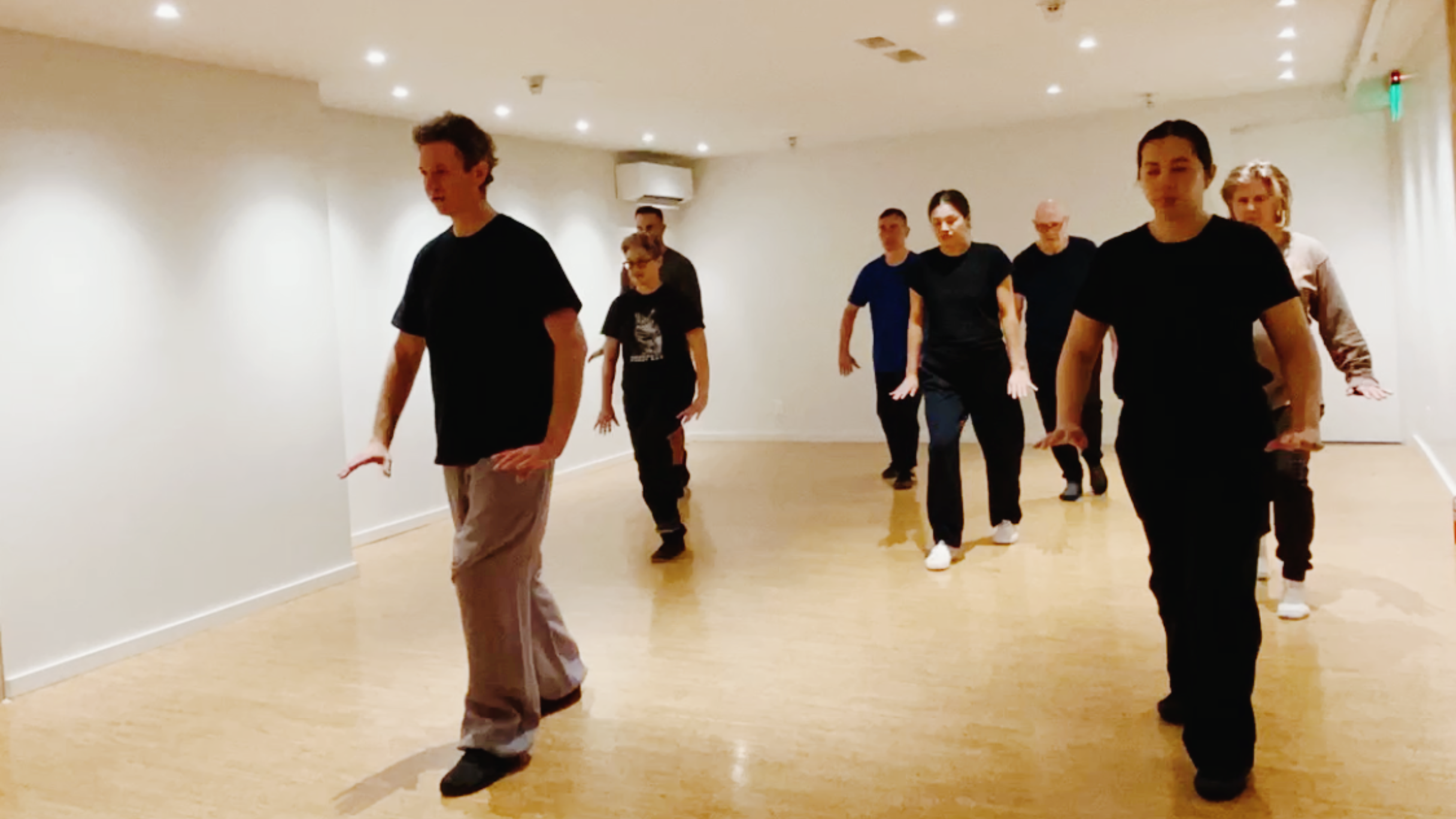
Tai Chi walking – or what practitioners call Tai Chi gait – is legit.
It's the foundational move in Tai Chi practice. One of the first things students learn. And yeah, it delivers real benefits.
Dr. Feng Yang from Georgia State calls it a "catlike walk." You move slowly. Silently. With total control of each step.
Unlike normal walking where you push off and use momentum, Tai Chi walking takes away the pushing. You slow everything down until you have complete control.
And here's where it gets interesting...
Research shows this challenges your balance MORE than regular walking. It forces your body to stabilize itself in ways normal movement doesn't.
Which means:
Better proprioception (your sense of where you are in space)
Stronger legs and core
Reduced fall risk
Improved balance and coordination
For anyone over 50, that last part is huge! Falls are one of the biggest threats to independence as we age.
So the viral videos aren't completely wrong. Tai Chi walking works.
But Here's What They're Missing (And It's Everything)
The problem with these viral videos isn't that they're promoting Tai Chi walking.
It's that they're packaging it like it's some isolated "hack" you can do for 7 minutes while scrolling Tiktok and Instagram.
Like it's separate from everything else.
It's not.
Tai Chi walking isn't a shortcut. It's a foundation.
Think of it like learning to play piano by only practicing scales. Sure, scales are important, but they're not music.
Here's what the viral trend leaves out:
1. The Internal Focus Is What Makes It Work
When I teach people to walk the circle in Ba Gua Zhang (which uses similar principles to Tai Chi walking), the external movement is only half of it.
Maybe less than half.
What's happening inside – the breath work, the internal alignment, the connection between your lower back (Mingmen) and your center of gravity (Dantian) – that's where the real transformation happens.
You're not just moving slowly.
You're learning to sense inside your body and feel the weight shift from one leg to the other. To connect your feet to your core to your breath.
One of my students put it this way:
"My relationship to my body has changed immensely. I feel stronger, more resilient, and have greater awareness of my body's structural integrity, balance, and gravitational dynamics."
That awareness? You don't get it from a 60-second TikTok.
The researchers quoted in the New York Times article are right when they say Tai Chi walking is like meditation. But meditation isn't something you can hack.
"The practice is only as good as the attention you bring to it," as one instructor put it.
And that attention? That's a skill that you develop over time.
2. You Need Feedback on What You're Actually Doing
Here's something I see all the time in my classes:
Someone thinks they're "sinking their weight" or "keeping their body upright" when they're actually doing the opposite.
Your proprioception – your sense of where your body is in space – isn't as accurate as you think it is.
Especially if you've spent years sitting at a desk or compensating for old injuries.
I had a student come in who'd been dealing with chronic ankle pain from an old injury. Acupuncture helped temporarily. Western doctors gave him the same temporary relief.
Six months into practicing Qi Gong and Ba Gua with proper instruction?
"I rarely think about that injury. I'm almost never in pain. Beyond that, the practice released tension I didn't know was there."
The difference wasn't the movements themselves.
It was learning to do them correctly. With feedback and with someone who could see what he couldn't feel yet.
Can you learn the basic mechanics of Tai Chi walking from a video? Sure.
Can you learn to do it correctly without feedback? Probably not.
3. Tai Chi Walking Burns More Calories Than You Think (But Not Because It's "Gentle")
One study found that Ba Gua circle walking – which uses similar stepping patterns to Tai Chi walking – burns 600-1,000 calories per hour.
Normal walking? 300-360.
But here's the thing...
It's not burning those calories because it's "easy" or "gentle."
It's burning them because you're loading your joints differently. You're engaging your whole body. You're creating internal resistance through proper alignment and breath.
When you do it right, it's physically demanding.
Just not in the way most people think of "demanding."
There's no joint stress, or pounding. No huffing and puffing.
But your legs will tell you the next day that you worked.
One student told me:
"Ba Gua was challenging from the beginning, but it quickly revealed a range of motion I wasn't accessing."
That's what proper practice does. It doesn't beat you up, it wakes you up!
4. The Real Benefits Come From Whole-Body Integration
The reason Tai Chi walking helps with balance isn't just because you're practicing standing on one leg.
It's because you're training your body to work as a connected whole.
Your feet connect to your legs. Your legs connect to your hips. Your hips connect to your spine. Your spine connects to your shoulders and arms.
Everything moves together like gears of a watch.
This is what researchers mean when they talk about proprioception. But it's more than just "body awareness."
It's your fascia – the connective tissue that wraps everything – learning to transmit force efficiently through your entire structure.
When that happens, you don't just have better balance.
You have better movement. Period.
I work with a lot of healthcare professionals and bodyworkers. They come in because they're curious. They stay because they realize this is the missing piece in everything they learned in school.
One student, who works an extremely demanding job, said:
"I'm constantly busy and my mind is always racing. The way the material is presented allows me to focus on my movements and breath, which carries over to the rest of my day. I highly recommend this to anyone looking to feel better, more focused, and more balanced."
5. It Gets Better With Age (If You Do It Right)
Here's something the viral videos won't tell you..
This practice actually improves the longer you do it.
I've trained with masters in their 70s and 80s who move better than most 30 and 40-year-olds.
Not despite their age. Because of their practice.
A study in Beijing compared elderly Ba Gua practitioners with healthy retirees who walked regularly.
The Ba Gua group had:
Better bone density
Better joint mobility
Better lung capacity
Better muscle strength
Better balance
Better hearing
They could walk faster with a slower heart rate and lower blood pressure.
Why?
Because they weren't just walking, they were cultivating something.
Another student described it this way:
"After class I feel magical. I finally understand how to breathe and my breathing is so much deeper. In just a year, so much has changed in my body and my relationship to my holding patterns."
That's what happens when you approach this as a practice, not a hack!
So Should You Try Tai Chi Walking?
Absolutely.
But don't treat it like a fitness hack.
Treat it like a practice.
Start with the basics. Learn the mechanics and pay attention to what's happening inside your body, not just what it looks like from the outside.
And if you're serious about it? Find a teacher.
Not because you can't learn anything from videos, you can.
But because the difference between doing the movement and doing it correctly is the difference between maintenance and transformation.
Not to mention one of the things I hear most as a teacher is that people hurt their knees doing Tai Chi.
News flash, it’s NOT Tai Chi.
It’s how it’s being taught and subsequently, performed.
What to Look for in Tai Chi, Qi Gong, or Ba Gua Classes
If you're in New York or can join online, here's what you should expect from quality instruction:
Proper foundational training that teaches you correct body alignment before you start moving
Breath work that connects your movement to your internal energy (not just "breathe deeply")
Feedback and correction so you're not reinforcing bad patterns
A complete system that includes standing meditation, circle walking, and forms – not just isolated movements
A teacher who's trained extensively in the lineage and can explain not just what to do, but why
At Root of Movement Internal Arts, I teach Tai Chi, Ba Gua Zhang, Qi Gong, and Nei Gong every week here in New York City (and online for distance students).
While these are separate practices. Ultimately, they're different expressions of the same principles.
Some people resonate more with Tai Chi's flowing forms. Others prefer Ba Gua's circular footwork and constant change. Some need the stillness of Qi Gong to start.
The practice that works is the one you'll actually do!
Ready to Start?
The viral videos got people interested. That's great.
Now let's do it right.
Check my weekly class schedule here and come experience what Tai Chi walking actually feels like when it's taught correctly.
In your first class, you'll learn:
The basic Tai Chi walking step (done correctly, with feedback)
How to connect your breath to your movement
Why your balance improves when you slow down
What "whole body integration" actually feels like
No AI-generated promises. No 7-minute shortcuts.
Just real practice that gets better the longer you do it.
See you in class.
Jonathan Breshin
New York City